Key Takeaways:
Board and batten siding Michigan applications have grown in popularity as homeowners seek alternatives to traditional horizontal lap profiles. This vertical style uses wide boards with narrow battens covering the seams, creating shadow lines and architectural interest. Understanding how board and batten performs in Michigan's climate and which material choices deliver the best value helps homeowners make informed exterior-upgrade decisions.
The right system depends on budget, maintenance tolerance, architectural style, and ownership plans. Michigan's freeze-thaw cycles and regional design preferences create specific performance and aesthetic considerations. Evaluating cost of board & batten options across vinyl, fiber cement, and engineered wood reveals clear trade-offs between upfront investment and lifecycle value.
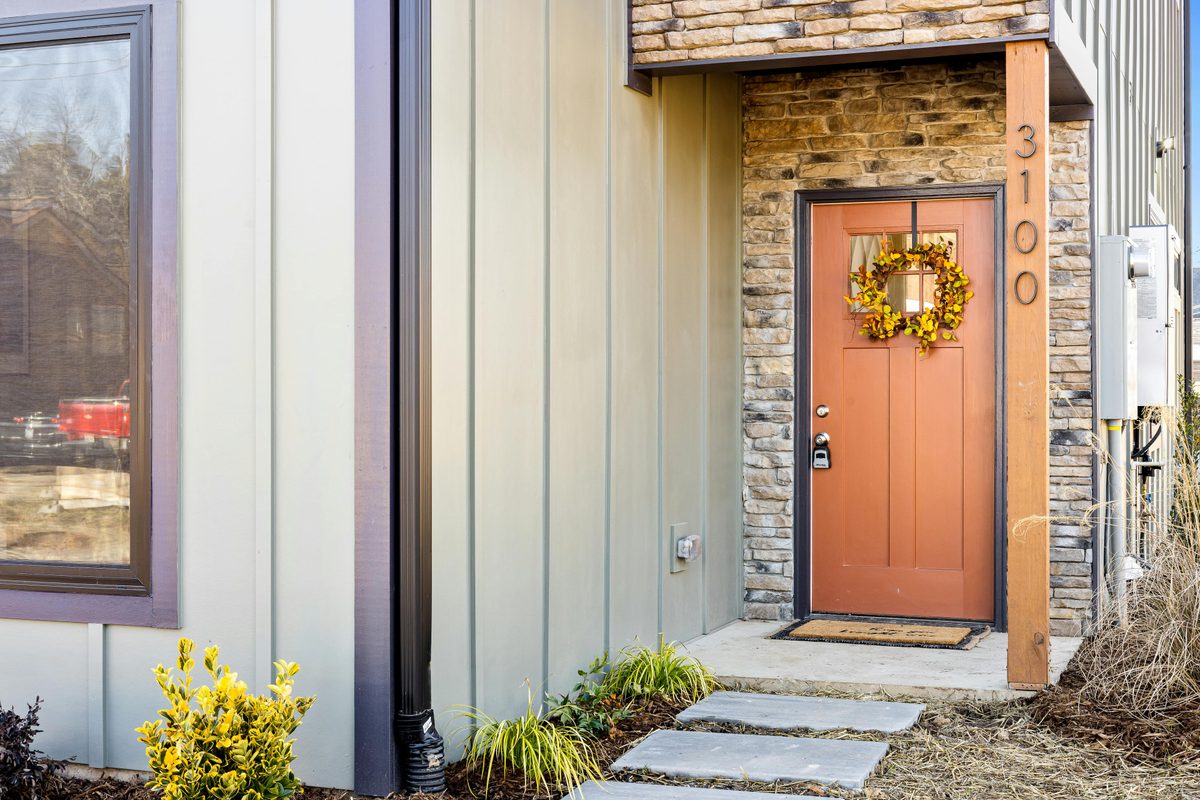
Board and batten siding creates a vertical exterior profile using wide boards and narrow cover strips. The battens seal joints between boards, historically improving weather resistance and reducing air infiltration. Modern systems recreate this appearance using engineered panels, planks, and trim components designed for simplified installation and consistent performance.
This vertical orientation distinguishes board and batten from horizontal lap siding common across Michigan homes. Shadow lines run top to bottom, emphasizing building height and creating visual contrast. The style works as full-facade coverage or as an accent treatment paired with horizontal cladding on gables, dormers, or feature walls.
Board and batten uses wide vertical boards plus narrow battens covering the joints between panels. Traditional applications featured solid wood boards with separate batten strips nailed over seams to shed water and improve airtightness. Modern factory-engineered systems integrate the board-and-batten look into single panels or use coordinated trim components that replicate the historic appearance.
Board and batten is a design profile, not a base material category. The same vertical aesthetic can be executed in vinyl, fiber cement, engineered wood, metal, or traditional wood. Material choice drives cost, maintenance requirements, and climate performance more than the profile itself.
Vinyl board and batten systems offer the lowest installed cost and broadest contractor availability across Michigan. Fiber cement delivers premium durability and curb appeal, especially in higher-end suburban markets where resale value matters. Engineered wood provides a middle option with authentic wood grain, lighter weight than fiber cement, and treated moisture resistance.
Metal board and batten suits modern and rural architectural styles with minimal maintenance and strong weather resistance. Traditional wood remains the aesthetic benchmark but requires regular repainting or staining, making it impractical for most Michigan homeowners seeking low-maintenance exterior solutions. Each material delivers the same visual profile while performing differently in freeze-thaw cycles and moisture exposure.
Board and batten aligns well with farmhouse, transitional, and modern-rustic styles gaining traction in Michigan's suburban and exurban markets. These architectural languages prioritize vertical lines, mixed materials, and textured facades that distinguish homes from standard horizontal-vinyl neighborhoods. Siding styles Michigan builders favor increasingly include vertical profiles as accent treatments on front elevations and gable ends.
Michigan's new-home material distribution provides context for board-and-batten adoption. A Michigan proxy shows 69.0% vinyl, 15.1% fiber cement, 11.2% brick or stone veneer, 3.9% wood products, and 0.8% other materials. Fiber cement gained 5.5 percentage points in the last 10 years and more than 15 points in the last 20 years, while vinyl fell by more than 5 points in the last 10 years, signaling a shift toward premium cladding options that support board-and-batten execution.
Board batten installation cost depends primarily on base material selection and project complexity. Vinyl systems occupy the budget tier, engineered wood and standard fiber cement fall in the mid-range, and factory-finished fiber cement or metal systems command premium pricing. Labor complexity increases with heavier materials and detailed trim work, especially on multi-story elevations with complex flashing requirements.
Regional contractor availability and material logistics also influence final project costs across Michigan. West Michigan and Southeast Michigan markets support broader material choices and competitive installation pricing due to higher permit volumes and established supply chains. Northern and rural markets may face higher per-square-foot costs for specialty materials requiring longer lead times.
Vinyl board and batten systems deliver the most accessible entry point for homeowners prioritizing style over premium durability. Budget-tier installations typically range from approximately USD 7.53 to USD 9.50 per square foot for straightforward projects. Vinyl baseline installation costs run USD 7.32 to USD 12.51 per square foot, making vinyl board and batten competitive with standard horizontal lap profiles.
Quality vinyl formulations with reinforced capstock layers provide acceptable freeze-thaw performance and color retention in Michigan climates. Insulated vinyl options add thermal performance and impact resistance while maintaining budget-tier pricing. Homeowners should prioritize thicker profiles and manufacturer warranties covering color fade and brittleness.
Engineered wood board and batten occupies the mid-range tier at approximately USD 9.50 to USD 12.50 per square foot installed. These systems combine wood strands with resin binders and protective treatments to resist moisture, rot, and insect damage. Engineered wood requires confidence in the treatment system and detailing to perform reliably in Michigan's freeze-thaw cycles.
Installation proves easier than fiber cement due to lighter weight and simpler cutting requirements. Authentic wood grain and texture appeal to homeowners seeking natural aesthetics without traditional wood's maintenance burden. Proper flashing, drainage, and finish coatings remain critical to prevent moisture intrusion.
Fiber cement board and batten represents the premium tier at approximately USD 12.50 to USD 15.80+ per square foot installed. Fiber cement installation costs range from USD 8.92 to USD 14.69 per square foot for standard configurations, with board-and-batten profiles adding complexity. Fiber cement is heavier, harder to install, and requires specialized cutting tools and experienced crews.
Metal siding systems run USD 8.82 to USD 14.67 per square foot baseline, with board-and-batten profiles using standing-seam panels or interlocking vertical planks. Premium factory-finished fiber cement and architectural-grade metal systems can exceed USD 18 per square foot on complex elevations. These materials justify higher costs through superior durability, minimal maintenance, and stronger resale value in upscale Michigan neighborhoods.
Board and batten siding works best on architectural styles emphasizing vertical lines and textured facades. Farmhouse, modern farmhouse, transitional, cottage, and modern-rustic designs all benefit from board-and-batten accents or full-elevation coverage. Colonial and traditional ranch homes can incorporate board and batten selectively on gables, dormers, or garage facades to add visual interest without conflicting with horizontal body cladding.
Urban and suburban markets show the strongest demand for mixed-material exteriors combining horizontal and vertical profiles. West Michigan and Southeast Michigan permit activity concentrates in areas where design-forward homeowners invest in curb appeal and resale positioning. Board and batten serves as a differentiation tool in neighborhoods dominated by standard horizontal vinyl.
Farmhouse and modern farmhouse styles represent the strongest natural fit for board and batten siding applications. These designs prioritize vertical board profiles, contrasting trim colors, and simple rectangular massing that showcases the shadow-line effect. Transitional styles blend traditional and contemporary elements, using board and batten as a bridge material that adds texture.
Cottage and coastal architectural languages also favor board and batten, especially in Michigan's lakeshore communities and resort markets. Modern-rustic and contemporary barn-inspired designs use board and batten to ground large glass expanses and metal roofing. Professional installation ensures proper moisture barriers and trim details that protect these architecturally expressive applications.
Accent applications concentrate board and batten on high-visibility elevations such as front gables, entry features, or chimney surrounds. This approach minimizes material and labor costs while maximizing curb-appeal impact at the street view. Pairing vertical board and batten with horizontal lap siding on main walls creates depth and visual contrast.
Full-facade board and batten coverage delivers the most dramatic architectural statement but requires careful budget planning. Material costs scale linearly with coverage area, while labor complexity increases on multi-story elevations requiring staging and extensive flashing work. Homeowners should evaluate whether full-coverage investment aligns with neighborhood positioning and resale expectations.
Board and batten siding enhances curb appeal by creating distinctive vertical shadow lines that differentiate homes from horizontal-vinyl neighborhoods. The style signals design intent and architectural investment, particularly when executed in fiber cement or engineered wood. Fiber-cement siding replacement delivers USD 21,485 job cost, USD 24,420 resale value, and 114% cost recouped according to national benchmarks.
Vinyl siding replacement shows USD 17,950 cost, USD 17,313 resale value, and 97% cost recouped. Homeowner priorities rated on a 5-point scale include better performance at 4.37, better appearance at 4.36, cost at 3.47, and recommended by others at 3.13. Appearance criteria emphasize holds up over time at 4.64, fits style of house at 4.30, and fits the landscape at 3.97, suggesting that board and batten's visual impact supports both immediate satisfaction and long-term value retention.
Michigan's climate creates specific performance requirements that influence board and batten material selection and detailing. Freeze-thaw cycles, winter ice damming, summer humidity, and UV exposure from long daylight hours demand cladding systems that resist thermal expansion, moisture intrusion, and color fade. Board and batten's vertical orientation naturally sheds water more effectively than horizontal profiles when properly flashed and sealed.
Material performance in cold climates varies significantly across vinyl, fiber cement, and engineered wood categories. Vinyl can become brittle in extreme cold, especially in lower-grade formulations without adequate impact modifiers and UV stabilizers. Fiber cement remains dimensionally stable through freeze-thaw cycles but requires careful installation to prevent cracking during handling.
Michigan homes endure freeze-thaw cycling that expands and contracts siding materials repeatedly throughout winter and spring. Ice damming and snow accumulation at roof-wall intersections create sustained moisture exposure that tests flashing and drainage details. Summer humidity and temperature swings approaching 100°F stress coatings and adhesives.
Wind-driven rain from Great Lakes weather systems penetrates inadequately sealed joints and trim transitions. UV exposure during long summer days degrades organic coatings and polymers in vinyl and engineered wood products. Northern Michigan and lakeshore properties face more severe exposure than inland suburban markets, requiring upgraded material specifications.
Vinyl has possible weathering or impact concerns in lower-grade products that lack sufficient capstock protection and impact modifiers. Premium vinyl formulations with thicker profiles and reinforced capstock layers maintain flexibility and color stability through repeated freeze-thaw cycles. Wood requires repainting or staining cycles every 3 to 7 years and shows moisture sensitivity that accelerates rot and decay.
Incorrect board and batten detailing can magnify moisture issues by creating horizontal water-collection points at batten-board intersections. Fiber cement delivers the strongest freeze-thaw performance due to cement-based composition that tolerates moisture without swelling or rotting. Engineered wood with advanced treatment systems resists moisture intrusion but requires careful maintenance protocols to preserve factory finishes and barrier protection.
Maintenance requirements for board and batten siding depend entirely on base material rather than profile style. Vinyl board and batten requires periodic cleaning with mild detergent and water to remove dirt and organic growth. Annual inspections should verify that caulk joints remain sealed and that no panels have warped or cracked.
Fiber cement and engineered wood demand more attention to finish coatings and trim caulking at batten-board interfaces. Factory-finished systems reduce repainting frequency but still require inspection of caulk lines and flashing every 2 to 3 years. Traditional wood board and batten needs repainting or restaining every 3 to 7 years depending on exposure, making it the highest-maintenance option for Michigan climates.
Board and batten occupies a distinct position between traditional horizontal lap siding and more specialized architectural profiles. Horizontal vinyl remains the volume leader in Michigan due to low cost and broad contractor familiarity. Board and batten offers differentiation without requiring exotic materials or custom fabrication.
Comparing board and batten with horizontal fiber cement highlights material-versus-profile decisions that shape project outcomes. Fiber cement in either configuration delivers superior durability and resale value compared with vinyl. The board-and-batten profile adds visual interest but does not fundamentally change the performance advantages that fiber cement holds over vinyl in Michigan winters.
Board and batten delivers stronger visual differentiation and architectural character compared with standard horizontal vinyl lap siding. Vertical lines create the perception of height and emphasize building proportions in ways that horizontal profiles cannot replicate. Shadow depth from battens adds texture that improves curb appeal at typical street viewing distances.
Installation on new construction or whole-house replacements proceeds at similar speed to horizontal profiles once crews establish proper techniques. Board and batten conceals horizontal seams and panel joints more effectively than lap siding. The profile pairs well with horizontal cladding to create mixed-material facades in uniform neighborhoods.
Fiber cement board and batten combines premium material performance with distinctive architectural styling that justifies higher project costs. The vertical profile enhances fiber cement's inherent durability and low-maintenance advantages by emphasizing design intent and custom craftsmanship. Homeowners investing in fiber cement already accept higher upfront costs in exchange for long-term value.
Factory-finished fiber cement board and batten systems eliminate field-painting requirements while delivering consistent color and finish quality. Manufacturers warranty coverage typically extends to 30 years or more for finish and substrate performance. The combination positions fiber cement board and batten as the strongest premium siding investment for Michigan homeowners prioritizing resale value and minimal maintenance.
Board and batten proves less practical when homeowners prioritize lowest installed cost above all other considerations. Standard horizontal vinyl consistently delivers lower per-square-foot pricing with faster installation and simpler trim details. Small-budget projects with limited scope for architectural differentiation rarely justify the board-and-batten premium.
Metal can be read as too industrial for some neighborhoods, limiting its appeal in traditional suburban markets. Board and batten also adds complexity on homes with numerous windows, doors, and architectural protrusions requiring extensive trim work and flashing. Homeowners planning to sell within 3 to 5 years in lower-price-point markets may not recoup the incremental cost over standard horizontal vinyl.
Michigan's regional diversity creates distinct market dynamics for board and batten siding adoption and material preferences. West Michigan and Southeast Michigan account for the majority of new-home construction and upscale remodeling activity where board-and-batten profiles gain the strongest traction. Northern Michigan markets prioritize durability and weather resistance over style-forward differentiation.
Demographic patterns also shape siding decisions across Michigan's housing stock. Millennials show the highest spending growth intent and strongest interest in design-led exterior upgrades that enhance curb appeal. Gen X homeowners balance aesthetics with practical value, while Boomers prioritize maintenance reduction and proven performance.
West Michigan and Southeast Michigan concentrate the strongest demand for board and batten siding due to higher permit volumes and design-conscious homebuyer preferences. The December 2025 regional permit mix shows 38.8% West Michigan, 36.8% Southeast Michigan, 10.7% Central/Lansing/Jackson, 9.4% Northern Lower Michigan, 2.5% Great Lakes Bay, and 1.7% Upper Peninsula. These patterns indicate where new-build and upscale-replacement markets support premium profiles.
Northern Michigan and lakeshore markets favor board and batten for vacation properties and modern-rustic primary residences where architectural differentiation justifies higher investment. Central Michigan markets show a more balanced mix of budget vinyl and mid-range fiber cement, with board-and-batten profiles used as front-elevation accents. Urban cores prioritize cost control, limiting board-and-batten adoption outside targeted renovation projects.
Millennials represent the strongest growth audience for board and batten siding due to high spending on home-improvement projects and preference for design-forward exteriors. One in five Millennials spend more than USD 5,000 annually on home-improvement projects. Gen X average spending is about 12.6% lower than Millennials, while Boomer spending is about 20.5% lower than Gen X.
Nearly half of Millennial homeowners plan to increase home-improvement spending over the next 12 months, creating opportunity for board-and-batten messaging focused on resale value and neighborhood differentiation. Millennials accounted for 29% of recent buyers, Gen X for 24%, and combined Baby Boomers for 42%. Gen X homeowners balance style with practical maintenance, making mid-range engineered wood and vinyl boards and batten appealing compromises.
Suburban and exurban markets demonstrate the strongest fit for board and batten siding across all material tiers. These areas concentrate new-build activity, design-conscious homeowners, and neighborhoods where architectural differentiation supports resale premiums. Fiber cement and engineered wood board and batten align well with suburban investment priorities balancing curb appeal, maintenance, and value retention.
Rural and small-town Michigan markets prioritize durability and low maintenance over style-forward profiles, favoring proven vinyl or basic fiber cement over premium board-and-batten systems. Urban cores show selective board-and-batten adoption in historic-district renovations and targeted curb-appeal projects where visible exterior improvements justify concentrated investment.
Deciding whether board and batten siding fits a Michigan home requires evaluating budget, architectural style, maintenance tolerance, and resale goals. Homeowners should determine whether their home's design supports vertical profiles without conflicting with existing architectural language. Farmhouse, transitional, and modern styles naturally accommodate board and batten, while colonial and mid-century designs may require more careful planning.
Budget analysis must account for both material and labor costs across vinyl, engineered wood, and fiber cement tiers. Maintenance preferences directly influence material choice, with vinyl requiring least upkeep and traditional wood demanding most. Resale considerations should weigh neighborhood positioning and comparable-home finishes.
Budget constraints directly determine which board and batten material tier homeowners can realistically pursue. Vinyl systems deliver the board-and-batten aesthetic at the lowest cost of board & batten installations, typically USD 7.53 to USD 9.50 per square foot. Homeowners prioritizing immediate affordability should accept vinyl's lower perceived prestige in exchange for broad contractor availability and minimal maintenance requirements.
Fiber cement and engineered wood command USD 9.50 to USD 15.80+ per square foot but justify higher investment through superior durability and resale value. Maintenance priorities should favor vinyl or factory-finished fiber cement for homeowners unwilling to commit to regular inspection and coating upkeep. Traditional wood board and batten suits only those accepting 3-to-7-year repainting cycles.
Architectural compatibility represents the most important non-financial factor in board and batten siding decisions. Farmhouse, modern farmhouse, and transitional styles provide the strongest natural alignment with vertical board-and-batten profiles. Homeowners with these architectural languages should prioritize board and batten as a primary exterior treatment.
Colonial, ranch, and traditional styles benefit most from selective board-and-batten accents on gables, dormers, or garage elevations rather than full-facade coverage. Contemporary and modern-rustic designs can deploy board and batten aggressively to emphasize vertical lines and create texture contrast. Homeowners should avoid board and batten on homes where vertical profiles conflict with dominant horizontal design elements.
Board and batten makes the strongest resale case in suburban markets where design differentiation commands measurable premiums over standard horizontal vinyl. Fiber cement board and batten delivers the best documented return on investment based on 114% cost recoup versus 97% for standard vinyl. Homeowners planning to sell within 5 to 10 years in upscale neighborhoods should treat fiber cement board and batten as a value-accretive improvement.
Budget-tier vinyl board and batten provides acceptable resale protection in mid-market neighborhoods where architectural variety exists but premium materials are uncommon. Homeowners in rural or lower-price-point markets may struggle to recoup board-and-batten investment above standard horizontal-vinyl baseline. Investment logic favors board and batten most strongly when combined with other curb-appeal upgrades that collectively reposition the home within its competitive set.
Board and batten siding Michigan homeowners choose reflects a balance between architectural ambition, budget discipline, and climate performance. Vinyl delivers accessible entry-level styling, engineered wood provides mid-range authenticity, and fiber cement commands the premium tier with superior durability and resale value. Understanding how these materials perform in freeze-thaw cycles and match regional design preferences helps homeowners make confident decisions.
The right board and batten solution depends on architectural fit, maintenance tolerance, and long-term ownership goals rather than material category alone. Michigan's diverse regional markets support different investment strategies, from budget-conscious vinyl in rural areas to premium fiber cement in West Michigan and Southeast Michigan suburban growth corridors. Homeowners prioritizing curb appeal and resale positioning should view board and batten as a strategic differentiation tool that justifies measured investment above commodity horizontal vinyl.
Alexandria Home Solutions helps Michigan homeowners navigate board and batten siding decisions with professional consultation and experienced installation crews. Licensed and insured professionals ensure proper material selection, moisture management, and trim detailing that protect long-term performance.
Explore professional siding services that deliver reliable results and comprehensive warranties on both materials and workmanship.