Door installation mistakes undermine home security, energy efficiency, and comfort regardless of material quality. Poor frame alignment creates gaps that allow drafts and moisture intrusion while compromising lock performance. Understanding which errors occur most frequently helps Michigan homeowners protect their investment through proper planning and execution.
Professional installation addresses issues that appear minor but create significant long-term problems. A door that sticks, leaks air, or shows premature weatherstrip wear often reflects installation shortcuts rather than product defects. Recognizing the difference between material selection and installation quality ensures better outcomes for replacement projects.
Steel entry doors use an insulated core wrapped in steel skins for security and thermal performance. These doors account for about half the market due to their affordability and strength. Fiberglass entry doors use a foam-insulated core with molded fiberglass skins that resist denting and weather damage. Wood entry doors use solid wood or laminated core with veneer for premium aesthetics and customization options.
Steel doors deliver the strongest security at the lowest mainstream cost for most applications. Wood represented 31.9% of the U.S. windows-and-doors market in 2023, maintaining relevance as a premium choice. Choosing the best materials for your exterior door requires balancing performance priorities against budget and maintenance preferences.
Storm doors use an aluminum or steel frame with glass, screen, retractable, or low-E panels. Typical installed storm-door project averages $434 for Michigan homeowners seeking added protection. Storm door ranges from $187 to $683 for standard installations with basic features.
Broader storm door project spans from $100 to $1,800, depending on frame quality and panel options. Basic storm door models cost about $150 before professional installation and hardware upgrades. These secondary doors work best when paired with older primary doors that still function adequately.
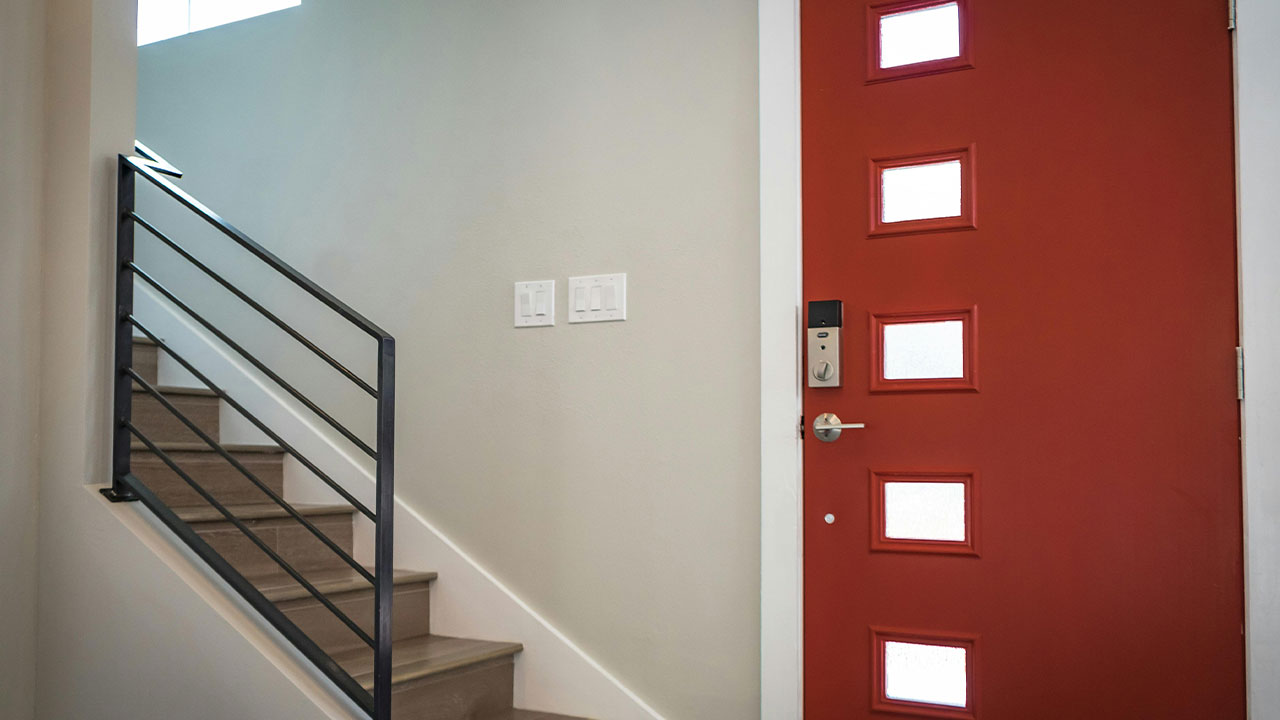
Smart door systems include insulated door slabs, ENERGY STAR-qualified assemblies, upgraded weatherstripping, and smart-lock ecosystems. Modern steel and fiberglass-clad entry doors commonly achieve R-5 to R-6 insulation levels. These systems reduce heating costs while improving security through integrated technology and superior thermal performance.
Smart and energy-efficient systems range roughly $900–$4,600 installed, depending on features and materials. Smart home integration adds convenience through keyless entry and remote monitoring capabilities. Higher upfront costs deliver measurable savings through reduced energy consumption and enhanced convenience.
A frame not installed square creates sticking, latch failure, hinge stress, and early weatherstrip wear. A rough opening not sealed causes moisture intrusion and concealed rot within wall assemblies. Missing flashing causes water damage at the threshold and subfloor that spreads undetected for years.
Poor threshold adjustment causes threshold abrasion and draft complaints that persist throughout the door's lifespan. These door installation mistakes compound over time rather than resolving naturally through seasonal adjustments. Proper door fitting prevents performance degradation and extends functional service life significantly.
Air leakage around improperly sealed frames wastes more energy than heat transfer through the slab. A Benton Harbor resident reporting air coming from under the door illustrates typical comfort complaints. Gaps between the jamb and the rough opening allow infiltration that undermines even high-performance door assemblies.
Bottom-edge leakage creates persistent winter discomfort regardless of insulation values listed on product specifications. Hidden leakage routes develop where installers skip perimeter sealing or use incorrect foam expansion rates. Weatherproofing your exterior door requires attention to details that remain invisible after trim installation.
Use level and shims while confirming reveal consistency before fastening the frame permanently. Seal perimeter with low-expansion foam and continuous caulk or backer rod along all edges. Use adhesive or liquid flashing with proper sill protection to prevent moisture damage.
Set sweep tight enough to seal without dragging across the threshold during normal operation. These prevention steps eliminate the most common home improvement errors that compromise door performance. Professional installers verify square alignment and weatherproofing integrity before completing trim work and final adjustments.
Security ranks among the top three front-door characteristics for 70% of homeowners surveyed. Durability appears in the top three for 65% of respondents making replacement decisions. These priorities explain why steel and reinforced fiberglass doors dominate mainstream replacement markets.
Lock quality, frame strength, and hinge reinforcement contribute more to security than material alone. Impact-resistant windows and reinforced doors address growing concerns about break-in prevention and severe weather protection. Michigan homeowners prioritize products that deliver measurable protection against both criminal activity and storm damage.
Drafts and air leaks trigger replacement decisions for 46% of homeowners experiencing discomfort. Energy efficiency motivation drives 35% of door upgrades as utility costs rise. Cold spots near entries and visible condensation signal inadequate thermal performance that justifies replacement timing.
Comfort problems become more noticeable during Michigan winters when temperature differentials stress inferior assemblies. Energy rebate programs offset replacement costs while delivering measurable monthly savings through reduced heating consumption. Homeowners often bundle door replacement with broader weatherization efforts for maximum impact.
Appearance motivates 54% of homeowners to replace or install new exterior doors. Security upgrade motivation reaches 39% while damage or function repair drives 37% of projects. Curb appeal improvements increase perceived home value and create positive first impressions for visitors.
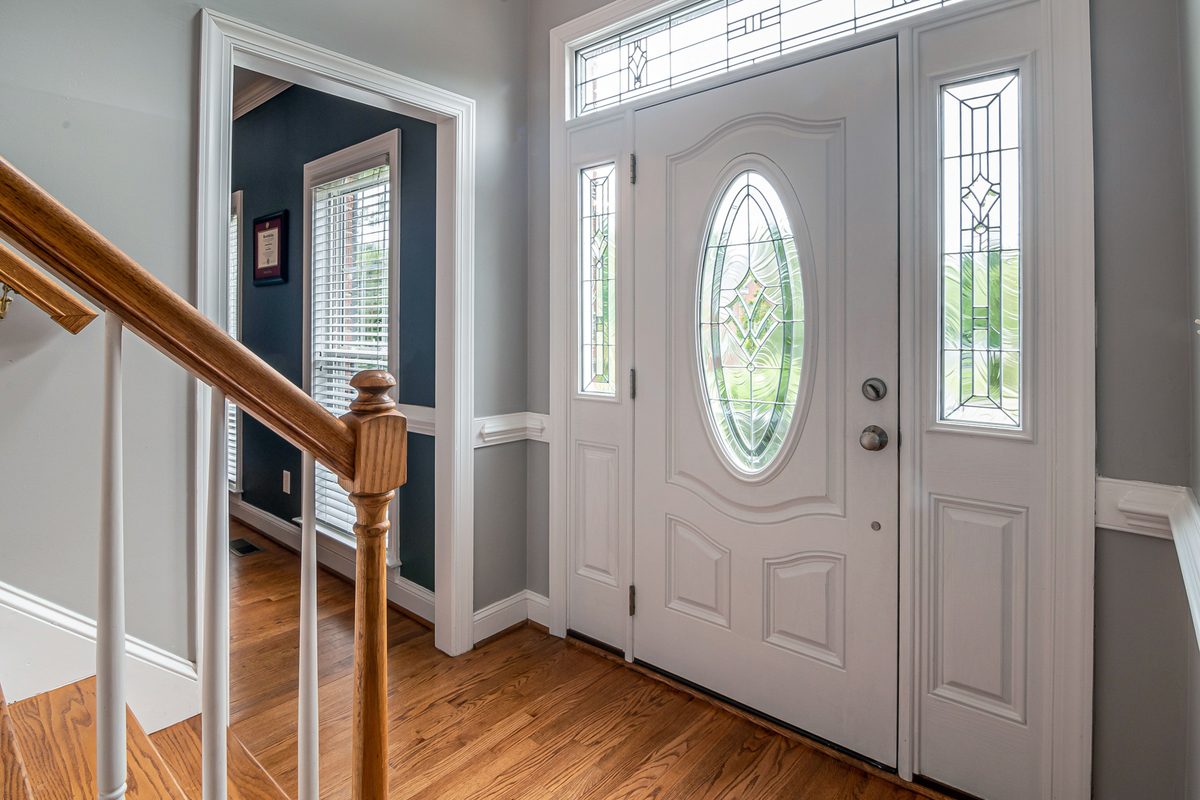
Style preferences shift toward contemporary designs with sidelights and decorative glass panels. Color options have expanded beyond traditional white to include grays, blacks, and custom finishes. Door upgrades often coincide with siding replacement or exterior painting projects for cohesive aesthetic impact.
Steel entry-door replacement costs $2,355 nationally for complete professional installation projects. Steel entry-door replacement generated an estimated resale value of $4,430 in recent benchmarking studies. Steel entry-door replacement recouped 188% of cost according to industry value analysis.
Budget storm door costs $175 versus mid-range options at $434 and premium models reaching $1,100. Fiberglass vs steel door selection impacts whether storm doors provide meaningful value or redundant protection. Return calculations depend heavily on existing door condition and climate exposure factors.
An older leaky door paired with basic storm costs $300 with $25 annual savings, creating a 12.0-year payback. New insulated door with added storm costs $500 but delivers only $8 annual savings, requiring a 62.5-year payback. Storm doors make economic sense primarily for serviceable older doors approaching but not requiring replacement.
Ventilation needs during spring and fall justify screen functionality for many Michigan households. Secondary protection against rain, snow, and UV exposure extends the primary door finish's life significantly. Homes with direct sun exposure should avoid storm doors on dark or wood-grain insulated entries.
Storm door on sun-exposed insulated door causes finish damage, warping risk, and trapped heat. Storm doors usually prove not economical for newer insulated doors with proper weatherstripping and thresholds. Heat buildup risk increases on sunny exposures where storm doors trap solar radiation against entry surfaces.
Modern insulated doors already provide R-5 to R-6 performance without additional storm barriers. Adding storm doors creates minimal thermal benefit while introducing maintenance requirements and potential damage risks. Homeowners replacing entry doors should allocate budget toward better primary units rather than supplementary barriers.
Boomers account for 38% of home-improvement spend across renovation categories, including entry upgrades. Gen X represents 34% of home-improvement spend with a strong focus on value and performance. Millennials contribute 22% of home-improvement spend while prioritizing smart technology and energy efficiency.
People 65 and older comprise 19.6% of the Michigan population, with high homeownership rates. Adults ages 75–84 own the homes they live in at 84% rates, driving replacement demand. Aging homeowners prioritize low-maintenance materials and easy operation over purely aesthetic considerations.
Urban counties contain 83.5% of the Michigan population, concentrated in metro Detroit and surrounding communities. Rural counties account for 16.5% of the population but captured 40.8% of the state population growth from 2020 to 2023. Door installation in Plymouth and similar suburban markets represents the highest absolute volume for replacement projects.
Urban homes prioritize security features and design-forward aesthetics in competitive neighborhoods. Suburban buyers balance curb appeal with energy performance and family-friendly functionality, including sidelights. Rural properties emphasize weather resistance and durability against harsher exposure conditions than protected urban locations.
Michigan's 2024 doors market is estimated at $493.5 million, which reflects substantial replacement demand. The market shows a 2024–2029 CAGR of 3.4%, driven by aging housing stock. Projected 2029 market size reaches $583.3 million as replacement cycles accelerate across the state.
Michigan had 4,670,131 housing units in 2024, creating a large addressable market for upgrades. Significantly, 47% of Michigan housing was built before 1970, when energy standards were minimal. Older homes require door replacement to meet contemporary comfort and efficiency expectations for current occupants.
Budget steel entry costs $546 versus mid-range installations at $1,456 and premium options reaching $2,375. Budget fiberglass entry starts at $800, compared to mid-range $1,800 and premium $3,200. Budget wood entry begins at $1,200, while mid-range reaches $2,500, and premium installations exceed $7,000.
Price differences reflect material quality, hardware upgrades, glass options, and installation complexity. Door maintenance tips include regular weatherstrip inspection and hinge lubrication regardless of material tier. Higher-tier products typically include better warranties and superior factory finishing that reduces long-term maintenance.
Door-only steel doors range about $150–$1,400 before installation labor and finishing costs. Door-only fiberglass doors span about $150–$3,000, depending on style and glass configurations. Door-only wood doors cost about $500–$3,000, with custom options exceeding these ranges significantly.
Mid-market fiberglass installed projects often fall around $1,500–$3,200 for complete professional installation. Premium wood installed projects can reach $7,000 or more, including custom millwork and hardware. Sidelights, transoms, and decorative glass panels add $300–$2,000, depending on size and complexity.
Proper installation extends functional service life by preventing premature weatherstrip failure and frame degradation. Professional installers use correct shimming techniques that maintain door operation throughout seasonal wood movement. Quality installation prevents the moisture intrusion that causes concealed rot and structural damage over time.
Poor installation voids manufacturer warranties and creates immediate performance problems regardless of material quality. Homeowners save money long-term by investing in correct installation rather than accepting low-bid shortcuts. Professional installation adds 10–20 years to door service life compared to typical DIY attempts.
Accurate rough opening measurement prevents ordering errors that delay projects and increase costs. Verifying electrical requirements for smart locks ensures compatibility before installation begins. Homeowners should photograph existing door hardware and note operational issues for installer reference.
Clearing access paths and protecting the flooring prevents damage during door removal and installation. Weather forecasts should guide scheduling since doors cannot remain open during rain or snow. Preparation includes arranging temporary security if installation spans multiple days or requires overnight exposure.
Steel doors deliver the strongest security and the lowest mainstream cost for budget-conscious buyers. Wood doors provide the best customization and a premium look for high-value homes, prioritizing aesthetics. Fiberglass doors offer good insulation and low maintenance for balanced performance without premium pricing.
Climate exposure, architectural style, and budget determine optimal material selection for each application. Michigan weather demands durable materials with proven resistance to temperature extremes and moisture exposure. Homeowners should prioritize verified thermal performance over decorative features when energy costs drive replacement decisions.
Professional installation eliminates the most common door installation mistakes that compromise performance and longevity. Licensed installers carry insurance protecting homeowners against property damage during installation work. Professionals complete installations faster while ensuring proper weatherproofing and operational adjustment that DIY attempts often miss.
Complex installations involving sidelights, transoms, or structural modifications require professional expertise and specialized tools. Warranty protection depends on professional installation for most premium door manufacturers and product lines. Homeowners lacking carpentry experience should hire professionals rather than risk costly errors requiring complete reinstallation.
Door installation mistakes create lasting problems that undermine security, energy efficiency, and home value. Proper material selection combined with professional installation delivers reliable performance throughout Michigan's demanding seasonal cycles. Homeowners who prioritize installation quality protect their investment while maximizing comfort and reducing long-term maintenance costs.
Alexandria Home Solutions helps Michigan homeowners avoid costly installation errors through expert consultation and professional service. Our licensed installers ensure proper door fitting, weatherproofing, and operational adjustment for maximum performance and longevity.
Your new door is only as good as the installation behind it. A quality slab paired with sloppy framing, missing flashing, or a poorly sealed rough opening will cost you in drafts, repairs, and lost energy year after year. That's why Michigan homeowners across Southfield, Troy, Bloomfield Township, Novi, Birmingham, and Rochester Hills trust Alexandria Home Solutions for their entry door replacements.
Our licensed installers handle every detail — square frames, proper weatherproofing, correct threshold adjustment, and the finish work that separates a door built to last from one that fails in two winters. Every project is backed by transparent pricing, comprehensive warranties, and a low-pressure consultation process designed to educate, not sell. Contact us to request your free in-home estimate today, and get a door installed the right way the first time.