Key Takeaways
Michigan winters demand immediate action on drafty windows, but full replacement isn't always financially feasible. Professional-grade energy savings stopgaps offer substantial energy savings and comfort improvements while you budget for permanent fixes. These temporary window repair solutions, when properly executed, can reduce heating costs by 15-40% and extend your timeline for window replacement without sacrificing home comfort.
This guide reveals which temporary solutions work best in Michigan's freeze-thaw climate, exactly how to implement them for maximum performance, and when it's finally time to invest in permanent replacement. Whether you're facing minor drafts or planning a multi-year savings strategy, you'll learn how to maximize your investment and minimize energy waste starting today.
Temporary fixes bridge the gap between immediate needs and long-term investment. They make financial sense when existing windows have minor issues, when full replacement isn't budgeted, or when you're planning to replace within 1-5 years. The key is matching the solution to your specific situation and timeline.
Temporary fixes deliver the fastest ROI. For $20-$200 per window, you achieve immediate energy savings with payback in one season or less. Insulating films and kits cost $15-$25 for 10 windows and improve single-pane R-value by 90%. Professional caulking runs $300-$800 for 15-20 windows and saves 10-20% on heating costs annually.
Full replacement costs significantly more but lasts longer. In Michigan, expect $1,500-$3,500 per window with a 20-50 year lifespan. However, payback through energy savings alone takes 10-20+ years. The real value is the 70-85% ROI at resale. If your windows need minor fixes and frames are sound, temporary solutions maximize your budget while maintaining comfort. Financing options can help when replacement becomes necessary.
Handle these yourself: Small cracks, minor drafts, loose latches, and minor leaks respond well to DIY weatherstripping, caulking, or shrink film. IGU seal repair (defogging) runs $75-$150 per window, a cost-effective fix for foggy glass without full replacement.
Call immediately for safety issues: Large broken panes, structural frame damage, windows above walkways, severe leaks, and fire escape windows require professional repair. Michigan's freeze-thaw cycles cause frame cracks and seal failure. If you see structural damage or severe water infiltration, temporary fixes won't suffice. Professional assessment prevents small problems from becoming expensive structural repairs. Learn more about securing windows effectively.
Proper preparation determines success. Clear your work zone completely, move furniture 3-4 feet from windows, remove all treatments and wall hangings, and lay protective sheeting. Document damage with photos for insurance and future contractor reference. Disable window alarms and secure pets and children away from the work area.
Surface preparation is critical in Michigan's climate. Clean all surfaces thoroughly with mild detergent and ensure complete drying. Sealants fail on wet or frosty surfaces; this is non-negotiable. For applications below 40°F, warm sealant tubes to 70°F for 24 hours prior to use. This ensures proper flow and adhesion despite cold conditions.
Four professional-grade solutions address drafts and energy loss effectively: weatherstripping for movable parts, shrink film for insulating air pockets, cellular shades for operable insulation, and high-performance caulking for permanent seals. Each targets specific failure points in Michigan's demanding climate.
EPDM rubber delivers the best cold-climate performance. At $0.50-$1.50 per linear foot, it lasts 10-20 years and remains flexible in extreme cold with excellent moisture resistance. Vinyl V-strip costs $0.25-$0.75 per foot, springs back to shape, and lasts 10+ years, ideal for insulating double-hung windows and sliding windows.
Expect 15-40% fuel savings. Michigan Weatherization studies confirm this range. Professional installation runs $116-$302 per window, but DIY saves substantially. Inspect twice yearly, before heating season and after spring thaw. Replace every 5-10 years or immediately upon visible damage. Proper weatherstripping accounts for up to 15% of heating and cooling savings according to DOE data.
Shrink film adds R-1.9 insulating value, a 90% improvement for single-pane windows. Heat loss drops up to 35%. Cost is minimal: $15-$25 covers 10 windows for one season. Apply double-sided tape to clean, dry frames, press film tight, then heat-shrink with a hairdryer to remove wrinkles and create the essential insulating air pocket.
Critical Michigan caveat: Control indoor humidity below 40% first. High humidity causes condensation between the film and glass, promoting mold and rot. If condensation forms on the room side of the film, increase ventilation or run a dehumidifier before sealing windows. The film works as a secondary vapor barrier; the primary window must stay dry.
Double or triple-cell cellular shades cut heat loss by 40% and reduce overall heating costs by 10%. They cost $150-$350 per window but last multiple years and remain operable for daily ventilation, critical for Michigan's humid climate. Mount inside the frame with a tight fit for maximum performance. Top-down/bottom-up operation allows flexible light control while maintaining the insulating layer.
Thermal curtains offer supplemental insulation at a lower cost. At $20-$100+ per window, they reduce heat loss up to 10% when properly sealed at the edges. Hang close to windows, extend beyond the frame on all sides, and use cornices or Velcro strips to prevent cold air from cascading into the room. Open fully on sunny winter days for solar gain; close tightly at dusk.
OSI Quad Max handles Michigan's extremes best. At $10-$15 per tube, it applies in temperatures from 0°F to 140°F with 5x stretch and Class 50 joint movement, essential for freeze-thaw survival. Tremco Vulkem 116 ($12-$20) excels on porous materials like masonry but requires 40°F+ application. GE Supreme Silicone ($8-$12) offers a fast 30-minute dry time and works in extreme cold.
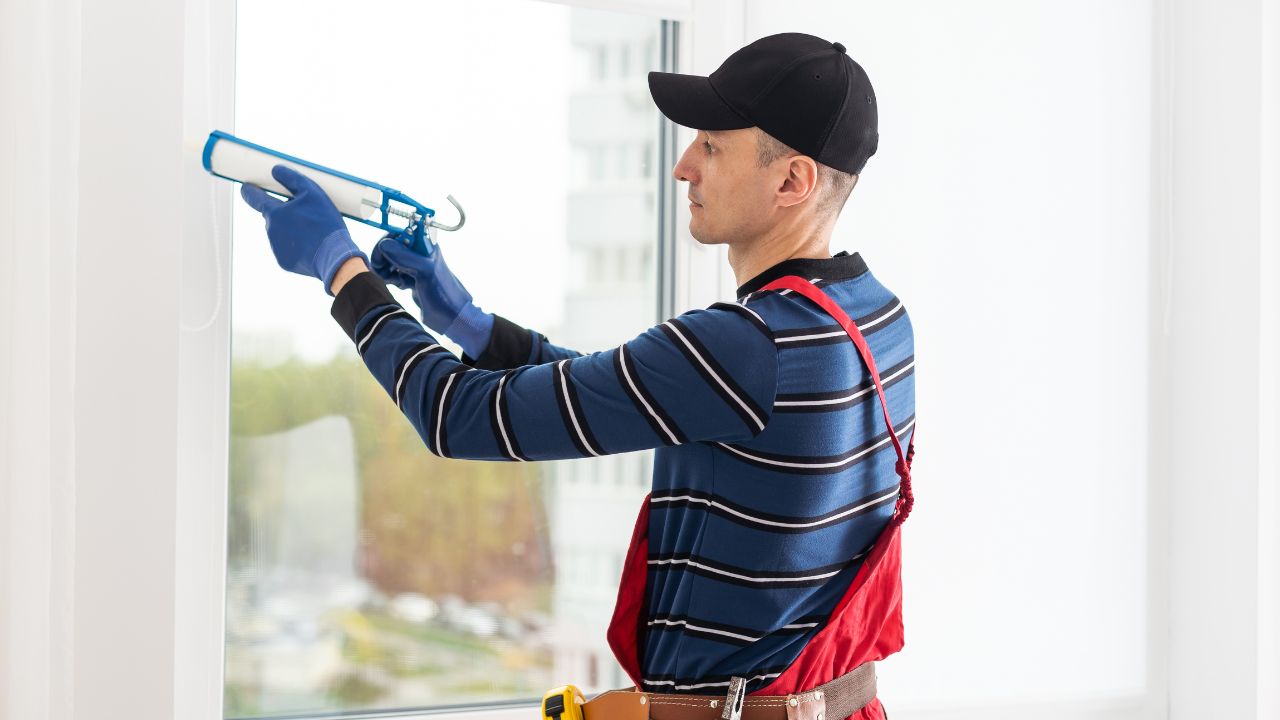
Proper technique is non-negotiable. Remove all old caulk with a utility knife, clean and dry surfaces completely, and ensure no frost. For gaps over 1/4 inch, insert backer rod first; this prevents three-sided adhesion and ensures proper depth-to-width ratio. Apply with steady pressure, tool immediately for a professional finish, and allow full cure per manufacturer specs (cold slows curing significantly). Air sealing reduces heating and cooling costs 10-20% according to DOE estimates.
Broken panes and failed seals compromise both energy efficiency and home security. While full replacement is the ultimate solution, strategic temporary fixes maintain comfort and safety during the 1-2 year savings period. Focus on glazing and seal patches for foggy windows and interior storm panels for comprehensive thermal improvement.
Seal failure shows as fog between panes; address it immediately. Condensation between the glass indicates the IGU seal has failed, causing massive energy efficiency loss. Defogging services cost $75-$150 per window and restore clarity while delaying full replacement. This buys 2-5 additional years before investing in new units.
Know your window's age to make replacement decisions. Average lifespan is 20-30 years; high-quality fiberglass lasts 30-50 years. If windows are within 5 years of expected lifespan and showing seal failure, prioritize full replacement. If relatively new, defogging plus exterior caulking maintenance extends usable life cost-effectively.
Interior storm panels deliver 50-75% cost savings versus full replacement. At $75-$200 per window, they reduce annual heating and cooling bills up to 30% and cut whole-house air leakage 10% or more. ROI hits approximately 80% at resale, substantially better than many temporary solutions. These systems use low-e acrylic or polycarbonate panels with magnetic sealing strips for easy seasonal installation and removal.
The airtight seal is non-negotiable in Michigan's humid climate. Any air leakage around the panel introduces warm, moist indoor air into the space between the panel and primary window, causing condensation and potential mold. Magnetic sealing systems ensure consistent compression and prevent moisture infiltration. For budget alternatives, 3M heat-shrink plastic film kits achieve similar air-sealing effectiveness at significantly lower cost but require annual replacement.
Moisture control separates successful temporary fixes from failed attempts. Michigan's high humidity and freeze-thaw cycles make water infiltration the primary enemy of window longevity. Active moisture management and proper drainage prevent condensation damage that undermines even the best temporary repairs.
Maintain indoor humidity below 40% during winter months. Excessive condensation on windows indicates humidity problems that lead to mold, seal failure, and frame rot. Run dehumidifiers in basements and high-moisture areas. Use exhaust fans during cooking and showering. Clear weep holes at the bottom of exterior frames; these small openings drain water that penetrates outer seals, preventing ice expansion damage during freeze cycles.
Lubricate hardware twice yearly to prevent binding. Apply silicone-based spray lubricant to tracks, hinges, and sash mechanisms before heating season and after spring thaw. This prevents binding caused by freeze-thaw contraction and ensures tight seals when windows close. Avoid petroleum-based products on vinyl; they degrade the material. Annual caulking inspection catches deterioration before it causes water infiltration and structural damage.
Temporary fixes require consistent maintenance to deliver advertised performance. Inspection schedules prevent premature failure and maximize your investment while saving for permanent replacement. Different materials have vastly different lifespans; knowing when to replace each component keeps energy savings on track.
Window shrink film lasts one season only; plan for annual replacement. Install before the first hard freeze and remove in the spring. Cellular shades and thermal curtains last multiple years with normal wear; replace when the fabric tears or mechanisms fail. EPDM rubber weatherstripping delivers 10-20 years if properly installed; vinyl V-strip lasts 10+ years. Foam tape needs replacement every 5-10 years or immediately when losing adhesion.
Inspect weatherstripping twice yearly without exception. Check before heating season starts and immediately after winter thaw. Look for visible cracks, compression that doesn't spring back, and loss of adhesion. Replace any damaged sections immediately; compromised weatherstripping negates energy savings from all other temporary fixes. Annual caulking inspection identifies separation and cracking before water infiltration causes structural damage requiring expensive repairs.
Strategic budgeting transforms window replacement from an overwhelming expense into a manageable investment. Understanding true costs, including hidden labor charges, helps you maximize savings through preparation, timing, and incentive programs. The goal is to replace windows when necessary while stretching your budget through smart planning.
Labor drives total project costs. Professional installation runs $100-$300 per window, with complete window replacement averaging $614-$1,309 nationally. Michigan averages are higher: $1,500-$3,500 per window. A full Detroit-area project ranges from $3,137 to $10,538, depending on window count and frame type.
Preparation cuts labor costs by 30%. Clearing work zones, removing treatments, protecting belongings, and securing permits reduces contractor time significantly. On a 10-window project, this saves $300-$900 by eliminating non-installation charges. The most effective preparation transforms your home into a "ready-to-go" state where crews focus exclusively on technical installation.
Energy savings accumulate quickly but vary widely. Replacing single-pane windows saves $101-$583 annually, with some homeowners reporting $50-$100 monthly reductions. Windows account for 25-30% of residential heating and cooling energy use; addressing this loss point delivers immediate utility bill relief.
Stack incentives for maximum savings. Federal tax credits cover 30% of qualifying energy-efficient window costs. Off-peak winter scheduling (January-March) yields 10-20% contractor discounts. Michigan's Weatherization Assistance Program provides free window replacement for eligible low-income households. Combining these programs dramatically improves project affordability and accelerates payback periods. Learn more about financing home improvements in Michigan.
Maintenance delivers faster financial returns. Proactive weatherstripping, caulking, and storm windows offer an immediate to 1-year payback versus 10- 20+ years for full replacement via energy savings alone. Proper maintenance extends vinyl window lifespan to 30-40 years and fiberglass to 40-50 years, often adding 10+ years beyond average expectations.
Replacement makes sense for structural issues and resale value. Full replacement recoups 70-85% of cost in home resale value. Replace when windows show repeated failures despite maintenance, worsening damage, safety concerns, or when approaching end-of-life (20-30 years for standard windows). If frames are sound and seals intact, strategic maintenance maximizes your investment while delaying major capital expenditure.
Can DIY Temporary Fixes Match Professional Results? Yes, with proper materials and technique. Shrink film, weatherstripping, and caulking deliver professional-grade results when surfaces are properly prepared and quality materials are used. Complex repairs, large broken panes, structural frame damage, and safety-critical installations require professional expertise. DIY excels at air sealing and insulation; professionals handle structural and safety work.
What Works Best in Extreme Cold? OSI Quad Max applies in 0°F conditions; GE Supreme Silicone services to -35°F. Cold-weather flashing tapes maintain adhesion to 25°F (-4°C). Critical technique: warm all caulk tubes to 70°F for 24 hours before application below 40°F. This ensures proper flow and bonding despite Michigan's harsh conditions. Surface must be frost-free regardless of product rating.
How Do I Know When Temporary Fixes Are No Longer Enough? Four indicators demand replacement: repeated failures despite proper maintenance, worsening damage or ongoing leaks, safety or security concerns, and windows approaching their typical 20-30 year lifespan. If you're repeatedly replacing the same weatherstripping or caulking fails within one season, the window system itself has failed. Structural frame damage, persistent water infiltration, or compromised security require immediate professional assessment and likely replacement.
Professional-grade temporary fixes buy valuable time while you save for full replacement. Start today with window shrink film, $15-$25 covers 10 windows, and improves R-value by 90%. This week, install weatherstripping for immediate 15% energy savings at $5-$15 per window. This month, caulk exterior perimeters for 10-20% additional savings, either DIY ($5-$15 per window) or professional ($300-$800 full home). This season, consider cellular shades ($150-$350 per window) for 40% heat loss reduction in an operable format.
Medium-term, interior storm panels ($75-$200 per window) deliver a 30% energy bill reduction, professional performance at a fraction of replacement cost. Schedule inspections, document maintenance and savings, and prioritize safety-critical windows when planning replacement. Target January-March installation for 10-20% off-peak savings on Michigan's $1,500-$3,500 per-window average. Full replacement recoups 70-85% at resale with 10-20+ year energy payback, but strategic temporary fixes extend window lifespan 10+ years while delivering immediate 5-40% energy savings.
The key is matching solution to timeline: temporary fixes maximize current budget, maintenance extends lifespan, and planned replacement secures long-term value and performance.
Ready to assess your windows and develop a custom solution plan? Contact Alexandria Home Solutions today for a professional evaluation and cost-effective strategy tailored to your home and budget.