Key Takeaways:
Southfield homeowners face a critical decision when upgrading their home's exterior: hire professional installers or attempt DIY installation. While Hardie Board fiber cement siding delivers exceptional performance, improper installation undermines every advantage this premium material offers. Michigan's demanding climate amplifies installation mistakes, turning minor errors into costly failures. This guide examines why professional craftsmanship isn't optional—it's essential for protecting your investment and maximizing Hardie Board's engineered capabilities.
Hardie Board represents the gold standard in fiber cement siding, specifically engineered for extreme climate performance. Understanding its composition and capabilities helps homeowners recognize why installation quality matters so critically.
Hardie Board consists of cement, sand, and cellulose fibers. This engineered composite creates dense material that resists thermal transfer and withstands impacts. The cement base provides fire resistance while cellulose fibers add tensile strength without wood's vulnerabilities. When exploring siding options, this material composition delivers performance no single natural material can match.
Hardie Board delivers 30–50 years of service life with proper installation, often exceeding 50 years with appropriate care. The material resists rotting, warping, insect infestations, fire, moisture, harsh weather, and impact. It contains no organic compounds supporting biological decay—termites cannot digest cement-based products. Fire resistance comes from the cement matrix that won't ignite or contribute fuel to flames. These properties eliminate entire maintenance and damage categories common to wood siding.
The HZ5® product line specifically targets climates with seasonal temperature variations, freezing temperatures, snow, and ice. Hardie Board maintains structural integrity from -40°F to 120°F. Unlike vinyl which becomes brittle and cracks in cold, fiber cement maintains integrity across varying temperature ranges. It's highly water-resistant, preventing rot even after prolonged moisture exposure. Testing demonstrates resistance to golf-ball-sized hail that would shatter vinyl. Certain products withstand wind speeds equivalent to Category 5 hurricanes, underscoring structural integrity in extreme conditions.
Installation quality determines whether premium materials deliver their designed performance. Proper execution protects warranties, ensures longevity, and prevents costly failures.
Installation quality determines whether premium materials deliver designed performance. Proper installation is crucial for warranty coverage and building envelope performance. HardiePlank lap siding (HZ5) is engineered specifically for the Midwest region including Southfield. It can be installed over braced wood or steel studs or directly to minimum 7/16 inch thick OSB sheathing. Installers must correct irregularities in framing and sheathing before installation to prevent mirroring through the finished application. This foundation work ensures the siding performs as engineered.
James Hardie offers 30-year limited warranties contingent on installation compliance. Improper installation is the most common reason for voided warranties. This includes wrong clearances, faulty flashing, improper nailing, unsealed joints, or unapproved materials. Using non-approved paints or caulks also voids coverage. Given Midwest weather severity, certified installers who understand climate-specific requirements become essential. Many manufacturers require certified installers, product registration, and maintenance guideline adherence. Warranty protection only exists with documented proper installation—without it, homeowners bear all costs for premature failure even when materials meet specifications.
Moisture absorption occurs if siding isn't installed to prevent water infiltration, leading to panel damage, rot, and mold. Installers must meticulously seal all penetrations and gaps with appropriate materials while maintaining proper clearances between siding and surfaces like rooflines and decks. Any deviation from manufacturer instructions can result in severe moisture issues and void warranties. Fiber cement is brittle before installation, requiring careful handling to prevent breakage. Wrong nail types or improper techniques cause blowouts at fastening points, compromising integrity. Cutting fiber cement generates respirable crystalline silica—hazardous dust requiring specialized equipment and personal protective gear to prevent serious health risks including lung cancer.
Professional installation directly impacts property value through enhanced curb appeal, increased resale returns, and long-term durability that buyers recognize and appreciate.
Neutral tones—beige, gray, white, soft blues or greens—have the broadest buyer appeal. Traditional lap siding, board and batten, and wood-look textures prove highly favored when implemented with modern, low-maintenance materials like fiber cement. The goal is a fresh, clean aesthetic that complements the home's architectural style and projects a move-in-ready appearance. Well-maintained modern siding signals overall home care, setting positive expectations for interior and mechanical systems. A refreshed exterior enhances curb appeal, making homes more attractive to potential buyers and potentially leading to faster sales and stronger offers.
National averages show fiber cement siding replacement delivers 113.7% ROI with $21,485 job cost returning $24,420 in value. The East North Central region achieves 101.2% cost recovery. Detroit shows 73.8% recovery with $22,292 investment returning $16,457—highlighting local market variation. According to the 2025 JLC report, approximately 114% ROI at resale nationally ranks fiber cement among top home improvements. Fiber cement recovers approximately 88% of costs versus vinyl's 82%. High-quality materials positively impact appraised value, particularly when enhancing energy efficiency or modernizing aesthetics. Several factors influence ROI including local market preferences, installation quality, warranty coverage, and timing relative to sale. For comprehensive insights on returns, review guidance on the impact of new siding on property performance.
With proper installation, fiber cement delivers 30–50 years of service life, exceeding 50 years with appropriate care. This 30–50 year lifespan exceeds vinyl's 40-year maximum, but more importantly, performance doesn't degrade at the same rate. Superior impact resistance maintains weatherproof integrity longer than lightweight alternatives. The difference between proper and improper installation determines whether homeowners realize this full lifespan or face premature failure requiring costly replacement decades early.
Michigan's climate creates specific challenges that proper installation must address. Understanding these environmental factors reveals why climate-appropriate techniques matter critically.
Water penetrates behind siding panels through gaps and seams. When temperatures drop below freezing, trapped water freezes and expands, exerting tremendous pressure on panels. As temperatures rise, ice thaws and contracts. Repeated expansion and contraction cycles weaken siding, eventually causing cracks. Cold temperatures make vinyl particularly brittle—especially below 20°F—increasing susceptibility to cracking from minor impacts. Foundation shifting from freeze-thaw cycles causes soil expansion and contraction, creating subtle foundation shifts. This movement stresses siding panels, causing separation, loosened fasteners, and cracks in brittle materials.
Trapped moisture creates ideal conditions for mold and rot. If moisture penetrates and becomes trapped behind siding, structural damage accelerates. Repeated moisture exposure leads to rotting wooden framing and structural elements. Wood framing exposed to consistent dampness begins rotting within months. The City of Southfield enforces Michigan Building Code requirements for wet areas and moisture protection. Professional contractors must implement proper sealing and house wrap techniques. High-quality house wrap is essential—breathable barriers block liquid water from reaching wooden frames while allowing water vapor to escape. This dual function prevents both external moisture intrusion and internal condensation problems.
HZ5® engineering specifically targets climates with seasonal variation, freezing temperatures, and snow loads. The product performs consistently whether temperatures swing 50°F in 24 hours or remain below freezing for weeks. Enhanced resistance to cracking, moisture absorption, and delamination from snow and ice protects homes year-round. Dense composition provides superior impact resistance against hail and wind-blown debris. Certain products withstand wind speeds equivalent to Category 5 hurricanes. Robust composition and secure installation methods keep fiber cement intact during powerful wind events, significantly reducing risks of loose panels or missing sections common to lesser materials.
DIY installation attempts frequently fail due to technical complexity and specialized requirements. Common mistakes create cascading problems that compromise the entire system.
Improper moisture barriers allow water infiltration causing panel damage and mold. Failing to seal penetrations compromises weatherproofing entirely. Inadequate clearances between siding and surfaces trap moisture against vulnerable areas. Poor flashing around openings creates direct leak points. Incorrect board spacing prevents thermal expansion accommodation, causing buckling. Imprecise cutting leaves gaps that admit water and pests. Primary moisture intrusion causes a link directly to installation errors: inadequate wall surface preparation, imprecise cutting, improper nailing, and poorly executed flashing and caulking around windows, doors, and openings. Each error multiplies problems across the installation.
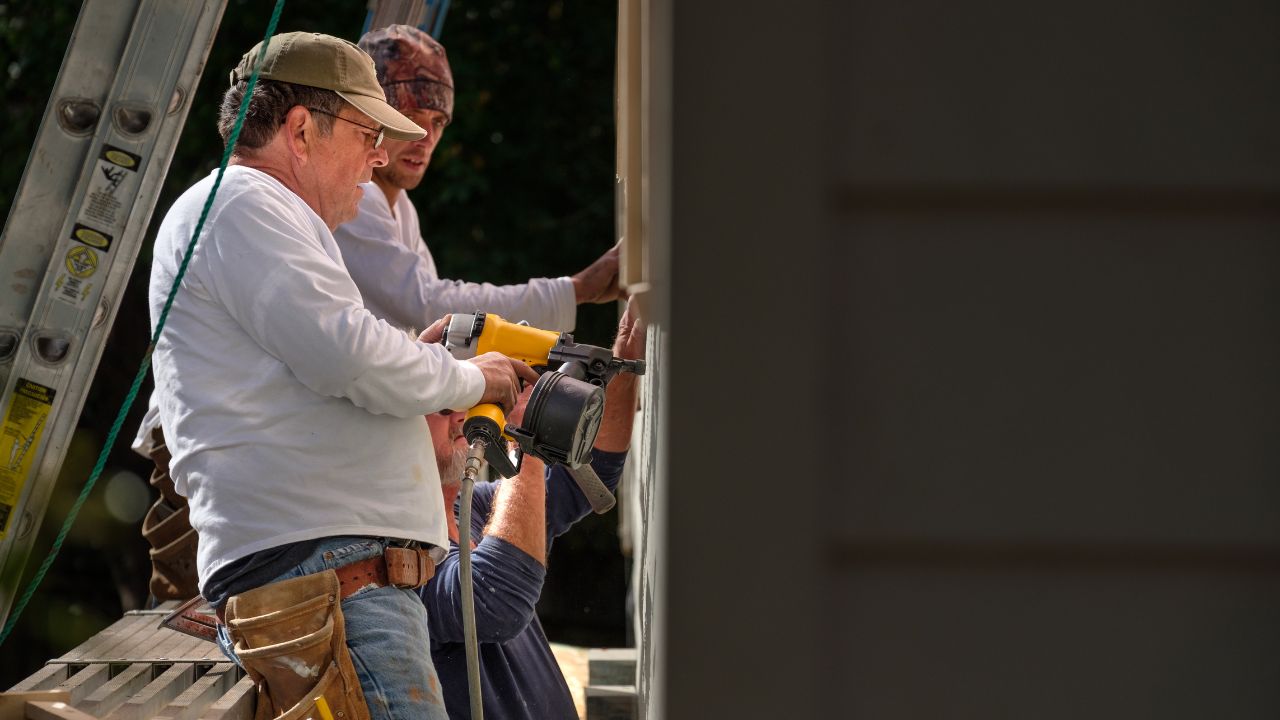
Wrong nail types or improper techniques cause blowouts at fastening points, compromising siding integrity. Incorrect nails cause panel fractures at attachment points. Insufficient penetration allows wind to tear panels loose during storms. Fasteners must be corrosion resistant—hot-dipped galvanized nails are recommended minimum. Pneumatic fastening is highly recommended with air pressure set to drive fasteners snug with siding surface. Lower-quality fiber cement lacks flexibility to withstand natural foundation shifting, causing boards to buckle and crack under pressure. Improper installation—boards placed too close together or incorrect nailing techniques—also leads to cracking and warping that accelerates over time.
Proper installation with appropriate moisture barriers creates an effective building envelope. Fiber cement's dimensional stability maintains tight joints preventing air infiltration. Professional installation with sealed penetrations and proper flashing significantly reduces drafts compared to deteriorated existing siding. Energy savings come primarily from eliminating infiltration points rather than material R-value alone. DIY installations frequently miss these critical sealing details, allowing conditioned air to escape and outdoor air to infiltrate. This drives up heating and cooling costs while reducing comfort. The cumulative effect over decades represents thousands of dollars in wasted energy expenses.
Initial cost differences disappear when lifecycle expenses reveal the true economics. Professional installation delivers measurable long-term savings.
Without correct installation, homeowners bear all costs for premature failure even when materials meet specifications. Proper installation protects both investment and warranty coverage. Fiber cement typically requires repainting every 10–15 years versus wood's demanding 3–7 years. Total lifecycle costs favor fiber cement despite higher installation expense—but only when installed correctly. Poor installation negates these advantages, requiring repairs, partial replacements, or complete reinstallation decades early. Professional work eliminates these costly interventions through proper execution from the start.
Deviation from manufacturer instructions causes severe moisture issues and voids product warranties. Lack of basic maintenance like periodic cleaning and re-caulking creates uncovered problems. Moisture intrusion leads to swelling, distortion, and rot because material contains wood pulp that absorbs water when not properly protected. For Michigan homeowners, freeze-thaw cycles present specific challenges—penetrating moisture freezes and expands, causing significant damage. These problems compound over years, ultimately requiring complete siding replacement plus structural repairs to damaged sheathing and framing. Total costs can exceed double the original installation investment.
Professionals store planks flat, dry, and covered to prevent shrinkage at butt joints. They carry planks on edge and protect edges and corners from breakage. Fiber cement's brittleness before installation requires careful handling and storage to prevent waste. All job-site cut edges must be protected with Universal Edge Sealer while factory edges come pre-painted. Edge sealer must be applied immediately after cutting on dry boards after beveling with fine-grade sandpaper and thorough cleaning. Professionals understand these requirements and execute them efficiently, minimizing material waste. DIY installers frequently break panels, make incorrect cuts, and waste material through inexperience—driving up total project costs despite "savings" on labor.
Selecting qualified installers protects your investment and ensures proper execution. Specific credentials and experience indicators separate professionals from amateurs.
Certified contractors who understand Michigan climate requirements ensure code compliance and proper execution. Installer certification verification is critical during contractor selection. Installation quality determines whether premium materials deliver designed performance. Fiber cement demands precision that untrained installers rarely achieve. Given harsh Midwest weather, siding must be installed by certified, experienced contractors who understand climate-specific requirements. These professionals have undergone manufacturer training, understand regional building science, and possess specialized tools for proper execution. For expert guidance on material and installer selection, explore comprehensive siding selection resources.
Request references from recent projects similar to yours. Visit completed installations to inspect workmanship quality. Check online reviews across multiple platforms for consistent feedback patterns. Verify licensing and insurance coverage appropriate for your project scope. Ask about warranty support and post-installation service. Request detailed written estimates that specify materials, techniques, and timelines. Professional contractors provide transparent documentation and welcome scrutiny of their work history. Be wary of contractors who resist providing references or rush the decision process.
To ensure warranty validity, use only certified installers. Warranty protection exists only with documented proper installation. Understand three primary warranty types: manufacturer's warranty (material defects), workmanship warranty (installation quality), and materials warranty. Register products as required and diligently follow all maintenance guidelines. Look for contractors affiliated with James Hardie's preferred contractor network. Professional trade associations like the National Association of Home Builders or regional equivalents indicate commitment to industry standards. Proper insurance including general liability and workers compensation protects homeowners from installation-related liability.
Expert installation techniques maximize material performance and longevity. Specific practices directly impact how well siding performs over decades.
With proper care, fiber cement lasts 50+ years. ColorPlus® Technology pre-finishes siding with curated, durable, fade-resistant colors baked onto boards, ensuring consistent, long-lasting finish. Products are specifically formulated for regional climate performance. The substrate doesn't expand and contract like wood, preventing paint film failure. The cement surface provides superior mechanical bonds compared to vinyl's smooth plastic. Professional installers understand these material properties and execute techniques that leverage them. They account for thermal expansion in large projects, ensure proper ventilation, and create drainage pathways that prevent moisture accumulation. These details determine whether siding reaches its designed lifespan or fails prematurely.
A water-resistive barrier (WRB) is critical for building envelope performance, required by local building codes to prevent moisture intrusion. Prior to siding installation, WRB must be properly installed per manufacturer instructions. James Hardie manufactures HardieWrap® Weather Barrier—non-woven, non-perforated housewrap complying with building codes. WRB must be installed with penetration and junction flashing ensuring moisture drains down and to exterior. James Hardie recommends water-resistive barrier joint flashing. Caulking isn't recommended for ColorPlus products—caulking and ColorPlus weather differently, creating aesthetic inconsistencies. Professionals understand these nuanced requirements and execute them correctly, creating weatherproof installations that perform reliably.
Fiber cement's R-value per inch ranges from 0.5 to 0.8. Dense composition contributes to thermal resistance, reducing heat transfer. Fiber cement's contribution to improved insulation helps maintain comfortable indoor temperatures year-round, potentially reducing heating and cooling costs. Modern fiber cement combined with exterior foam boards creates highly energy-efficient walls with superior moisture protection. Professional installation creates effective building envelopes. Dimensional stability maintains tight joints preventing air infiltration. Sealed penetrations and proper flashing significantly reduce drafts. Energy savings come from eliminating infiltration points rather than material R-value alone. These details require expertise that DIY installers typically lack.
Local contractors bring specific knowledge about regional requirements and conditions. This expertise translates to better installations and ongoing support.
The City of Southfield enforces Michigan Building Code requirements. James Hardie provides specific clearance and flashing requirements: roof to wall minimum ¼ inch clearance (don't caulk), deck to wall minimum 2 inches clearance, ground to siding minimum 6 inches clearance, gutter to siding minimum 2 inches clearance in sheltered areas. Slabs, paths, and steps require IRC code-compliant Z-flashing (typically minimum 4×4 inches). Adjacent finished grades must slope away from buildings—typically 6 inches in the first 10 feet. IBC Code 1403.2 requires weather-resistant exterior wall envelopes including flashing. IBC Code 1405.3 mandates flashing installation preventing moisture entry or redirecting it to the exterior. Local experts navigate these requirements efficiently, ensuring compliant installations without delays.
Southfield experiences significant wind activity year-round. The windier period spans October to May with average speeds exceeding 10.6 mph. January brings peak conditions at 18.2 mph average. Doppler radar detected hail at or near Southfield on 28 occasions within the past year. The region recorded 37 severe weather warnings during the same period. Analysis shows 100% of Southfield homes face measurable wind risk. Understanding these weather patterns is crucial for proper installation planning and execution. Local contractors schedule work during optimal weather windows, use appropriate fastening for wind loads, and implement techniques proven effective in Southfield's specific conditions. This regional expertise prevents problems that generic installation approaches might miss.
Local contractors maintain reputations within their service areas, incentivizing quality work and responsive service. They're available for warranty support, maintenance questions, and future projects. Understanding local architectural styles and neighborhood aesthetics helps them provide appropriate recommendations. Local businesses depend on referrals and repeat customers, driving accountability that national chains can't match. When issues arise, local contractors respond quickly rather than navigating corporate bureaucracy. For comprehensive services including installation support and maintenance, local expertise delivers measurable advantages. This ongoing relationship protects your investment long after installation completes.
Strategic timing impacts both installation quality and project costs. Understanding seasonal factors helps homeowners plan effectively.
Fiber cement siding, particularly James Hardie products, can be installed during winter months even in Michigan climates—a significant advantage over alternative materials. However, some adhesives may not set properly in extremely cold temperatures. Fiber cement becomes more brittle in cold weather, requiring careful handling to prevent cracking during installation. Michigan contractors confirm they install James Hardie throughout most winter months, demonstrating cold weather suitability. Spring and fall offer ideal conditions with moderate temperatures and lower precipitation. These seasons provide optimal working conditions while avoiding extreme heat or cold that complicate installation.
The windier period spans October to May with average speeds exceeding 10.6 mph. Calmer periods occur in August at 12.1 mph average. Severe thunderstorms generate wind gusts up to 60 mph, threatening building exteriors. Average maximum wind speeds in Southfield have increased over 30 years, indicating escalating risk. These weather patterns should inform installation timing. Contractors schedule around predicted severe weather, avoid installing during high winds, and plan for seasonal precipitation patterns. Understanding these cycles helps prevent weather-related delays and ensures proper curing and setting of adhesives and sealants. Professional contractors monitor forecasts continuously and adjust schedules to avoid compromising installation quality.
Installation duration depends on project scope, home size, architectural complexity, and weather conditions. Average single-family homes typically require 1-3 weeks for complete installation including preparation, siding application, and finishing details. Larger or more complex projects may extend to 4-6 weeks. Professional contractors provide detailed timelines during estimation, accounting for material delivery, weather contingencies, and coordination with other trades. Rushed installations compromise quality—proper execution requires adequate time for each phase. DIY attempts typically take 2-4 times longer than professional installations and frequently require correction of mistakes that extend timelines further.
Hardie Board's engineered performance depends entirely on proper installation. Michigan's demanding climate amplifies every installation error, turning minor mistakes into major failures. Professional craftsmanship isn't just recommended—it's essential for protecting your investment, maintaining warranty coverage, and ensuring decades of reliable performance.
Alexandria Home Solutions specializes in professional Hardie Board installation for Southfield properties. Our certified installers understand Michigan Building Code requirements, implement climate-appropriate techniques, and deliver workmanship that protects your warranty and investment. Contact our team today to discuss how expert installation can maximize your Hardie Board siding's performance, longevity, and value for your home.