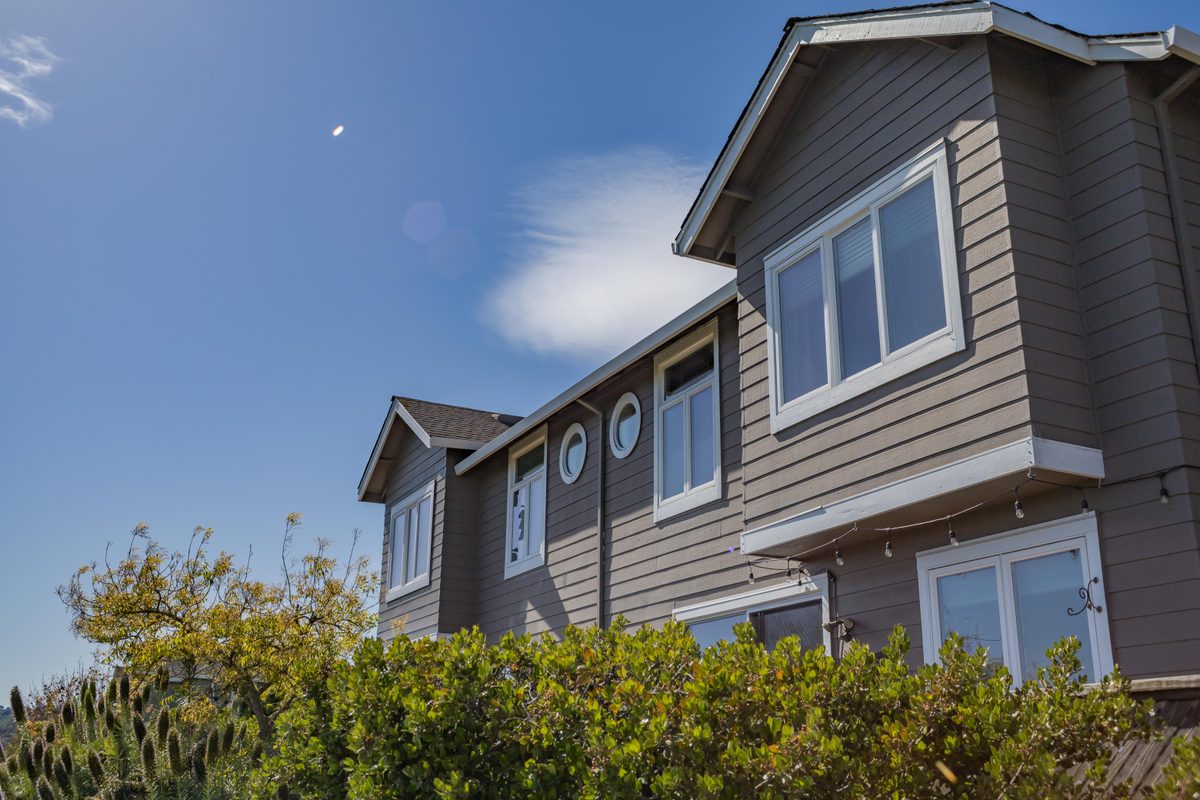
Selecting the best siding materials Michigan homeowners need requires understanding how Great Lakes weather affects exterior performance. Freeze-thaw cycles, wind-driven rain, and temperature extremes create conditions where material choice and installation quality determine whether cladding protects or fails. Vinyl accounts for 69% of new homes in the East North Central region in 2024, while fiber cement captured 23% of new U.S. single-family homes.
Michigan's 73.2% homeownership rate drives replacement demand, as owner-occupiers invest in upgrades, balancing durability, appearance, and maintenance reduction. Homeowners cite worn-out surfaces as the primary project trigger at 53%, while 39% replace siding due to damage. This guide examines vinyl, fiber cement, wood, composite, and metal options to help Michigan residents choose durable exterior cladding that suits their climate, budget, and long-term goals.
Vinyl, fiber cement, wood, composite, and metal represent the primary siding categories Michigan homeowners consider. Vinyl holds the largest market share at 43.63% of the 2025 North America siding revenue, supported by cost-effectiveness and moisture resistance. Fiber cement follows as the leading premium alternative, while wood maintains importance in design-focused applications.
Composite and metal systems serve specialized segments, particularly for homeowners prioritizing modern aesthetics or enhanced weather resistance. Material selection depends on balancing initial cost, expected service life, maintenance requirements, and climate suitability. Understanding each category's performance in freeze-thaw conditions helps Michigan buyers make informed decisions.
Vinyl siding solutions accounted for 69% of new homes started in Michigan's East North Central division in 2024, increasing from 67.4% year-over-year. Vinyl represented 43.63% of 2025 regional revenue across North America, confirming its leadership in both new construction and replacement markets.
Installed vinyl siding costs range from $3 to $12 per square foot: budget options at $3 to $5, mid-grade at $6 to $8, and premium products at $9 to $12. The material offers moisture resistance and low maintenance, making it suitable for Michigan's humidity and temperature fluctuations when properly installed with expansion gaps and corrosion-resistant fasteners.
Fiber cement represents 23% of new U.S. single-family homes in 2024, up from 21.7% in 2023. Fiber cement siding performance delivers strong fire, pest, and moisture resistance, with installed costs ranging from $5 to $14 per square foot.
The National Association of REALTORS shows 86% cost recovery for fiber cement projects, exceeding vinyl's 82% recovery rate. Department of Energy benchmarks place fiber cement at $7 to $10 per square foot. The material requires professional handling due to weight and cutting requirements, but provides superior resilience against freeze-thaw cycles and wind-driven rain common in Great Lakes climates.
Wood represents 6% of new U.S. single-family homes in 2024, rising from 5.1% in 2023. Solid wood delivers authentic grain and texture, appealing to homeowners prioritizing natural aesthetics or historic restoration. Wood siding costs $7.50 to $12.50 per square foot installed, requiring ongoing maintenance including repainting, staining, and moisture detailing to prevent rot and pest damage.
Composite siding represents approximately 1.1% of the 2025 U.S. market, with demand reaching $172 million and 1.8% annual growth. Composite options range from $1 to $6 per square foot for engineered wood products to $7.50 to $9.50 for wood-plastic composite panels, providing a middle ground between vinyl affordability and wood aesthetics.
Michigan homeowners prioritize durability and performance over initial cost when selecting siding materials. Research shows 57% ranked durable and long-lasting materials as the most important result from siding projects. Academic studies confirm that appearance and performance influence material selection more than cost or personal recommendations.
The decision framework weighs expected service life, weather resistance, maintenance requirements, and visual appeal. Multiple priorities intersect in most replacement decisions, with homeowners often addressing worn surfaces, damage repair, curb appeal, and energy efficiency simultaneously. Understanding these motivations helps contractors frame material comparisons around lifecycle value rather than upfront price.
Durability ranks as the highest-priority outcome for siding projects, with 57% identifying long-lasting materials as most important. This priority reflects Michigan's climate demands, where freeze-thaw cycles, wind-driven rain, and temperature extremes test material resilience. Homeowners recognize that professional siding installation affects how well any material performs under these conditions.
Great Lakes weather siding requires materials and installation practices that manage moisture penetration and thermal expansion. Water-resistive barriers, proper flashing, and drainage planes become as critical as the cladding itself. A correctly detailed mid-grade system often outperforms a premium material installed without proper moisture management.
Appearance influences siding selection more than cost, according to academic research. Thirty-six percent of homeowners cited improving curb appeal as a primary replacement reason. Visual impact matters for resale value, neighborhood fit, and personal satisfaction, especially in Michigan's established suburban communities.
Material choice affects architectural style, color options, texture, and finish consistency. Fiber cement offers paintable surfaces with a stable appearance, while vinyl provides factory color through the material. Wood and composite options deliver natural or wood-like grain patterns that appeal to design-conscious buyers.
Thirty-two percent of homeowners wanted to reduce maintenance when undertaking siding replacement projects. Maintenance concerns include cleaning frequency, repainting cycles, repair costs, and susceptibility to damage from weather, pests, or impact. Vinyl and metal systems generally require only periodic washing, while wood demands regular sealing, painting, or staining to prevent moisture damage and rot.
Maintenance requirements for fiber cement fall between vinyl and wood, needing repainting every 10 to 15 years but resisting rot and pests. Homeowners with limited time or physical ability often prioritize low-maintenance materials despite higher initial costs. The 32% who cited improved energy efficiency often pair siding replacement with house-wrap upgrades and insulation improvements.
Michigan's homeownership rate of 73.2% exceeds the national average of 65.2%, creating a large base of owner-occupiers likely to invest in major exterior upgrades. The state represents 3.57% of U.S. owner-occupied housing units when adjusted for its higher ownership concentration.
Demand distribution varies between urban cores, suburban rings, and rural areas due to ownership rate differences. Michigan's highest homeownership rates occur in rural northern and northeastern regions and exurban parts of southeastern Michigan, influencing where siding contractors find the strongest project concentration.
Michigan's statewide homeownership rate of 71% confirms the state's ownership-heavy housing structure. Owner-occupiers drive siding replacement demand because they bear direct financial responsibility for exterior maintenance and benefit from property value improvements.
Michigan represents 3.57% of U.S. owner-occupied housing units when scaled for its higher ownership rate. This concentration means the state generates proportionally more replacement activity than its population suggests. Contractors serving Michigan markets benefit from a reliable base of homeowners with equity and maintenance motivation.
Selected Detroit PUMAs show homeownership below 50%, indicating lower concentrations of owner-occupied single-family projects in central urban areas. Grand Rapids demonstrates 60% millennial homeownership, suggesting healthier owner demand in Michigan metro areas outside Detroit. Rural and small-town markets typically show stronger ownership rates than large urban cores.
Millennial homeownership in non-metro areas reaches 52% nationally, compared to 35% in the largest urban markets. Rural northern and northeastern Michigan regions maintain the state's highest homeownership rates, supporting contractor strategies focused on these geographic segments.
Baby Boomer homeownership nationally is 74% in 2024, making this cohort important for aging-in-place decisions and low-maintenance materials. Gen X homeownership reaches 65% nationally in 2024, positioning this group as a core remodeling segment with accumulated equity and deferred maintenance needs.
Millennial homeownership nationally stands at 47% in 2024, representing a smaller but growing replacement demand share. This younger cohort drives demand for modern aesthetics, energy efficiency, and turnkey installation services. Age-related differences suggest contractors should tailor messaging and product offerings to cohort-specific priorities.
Proper installation practices matter as much as material selection in Michigan's freeze-thaw climate. Water-resistive barriers, flashing integration, and drainage detailing determine whether cladding systems manage moisture effectively or trap water. Department of Energy guidance emphasizes that installers should assume water will penetrate any cladding type, making moisture escape routes essential.
Choosing the right siding requires understanding installation requirements beyond surface appearance and material specifications. Hidden water damage often worsens under freeze-thaw stress, accelerating rot in sheathing and framing. Michigan homeowners should expect thorough moisture inspections, sheathing assessment, and proper barrier installation as standard practice.
A water-resistive barrier manages moisture in wall systems by allowing vapor to escape while blocking liquid water penetration. Hidden water damage is common in Michigan homes and worsens under freeze-thaw stress when trapped moisture expands. Water can penetrate any cladding type through joints, penetrations, and wind-driven rain.
Proper moisture management includes installing or repairing barriers behind cladding, integrating flashing around windows and doors, and detailing roof-wall intersections. Neglecting moisture detailing leads to premature failure regardless of material quality or initial cost.
Freeze-thaw exposure is a repeated cycling between freezing and thawing temperatures that occurs throughout Michigan winters and spring transitions. This cycling causes trapped moisture to expand when freezing, creating internal stress that cracks materials, loosens fasteners, and accelerates deterioration. Materials and installation systems must accommodate thermal movement and provide drainage paths.
Fiber cement and metal systems generally tolerate freeze-thaw conditions well when properly fastened with appropriate expansion gaps. Vinyl requires installation, allowing movement to prevent warping or buckling. Wood and composite products need effective sealing and moisture barriers to prevent water absorption.
Professional installation practices begin with the removal of old cladding where required to assess underlying conditions. Inspection of sheathing and framing for moisture or rot follows the tear-off, often revealing hidden damage common in older Michigan homes. Installation or repair of water-resistive barriers comes next, followed by flashing integration around windows, doors, penetrations, and roof-wall intersections.
Homeowners should expect possible change orders for rot repair, trim correction, or structural issues discovered during removal. Weather delays affect scheduling, as rain, wind, and cold temperatures impact sealant curing and staging logistics.
Material preference trends show vinyl maintaining market leadership while premium alternatives gain incremental share. Vinyl's share in new homes rose from 25.6% in 2023 to 26% in 2024. Fiber cement increased from 21.7% to 23% during the same period, indicating growing adoption among buyers seeking enhanced durability and resale value.
Wood share moved from 5.1% to 6% year-over-year. Composite siding demonstrates 1.8% annual growth through 2025, driven by products offering wood appearance with reduced maintenance. These trends suggest Michigan homeowners are increasingly segmenting into value-focused vinyl buyers and premium-material adopters.
Vinyl represented 43.63% of 2025 North America siding revenue. The material's share in Michigan's East North Central region increased from 67.4% to 69% in new homes. Vinyl maintains leadership through cost-effectiveness, widespread contractor familiarity, and performance suitable for most residential applications.
Price ranges from $3 to $12 per square foot installed, allowing vinyl to serve budget-conscious, mid-grade, and premium segments. The National Association of REALTORS shows 82% cost recovery for vinyl projects.
Fiber cement's share of new U.S. homes rose 1.3 percentage points from 2023 to 2024, reaching 23%. This growth rate exceeds vinyl's 0.4-point increase during the same period. Fiber cement appeals to homeowners prioritizing siding longevity, weather resistance, and resale value.
Comparing fiber cement to vinyl shows that the premium material offers superior fire, pest, and moisture resistance but requires a higher initial investment. The National Association of REALTORS reports 86% cost recovery for fiber cement versus 82% for vinyl.
Composite siding demand reached $172 million in 2025 U.S. demand, with 1.8% annual growth projected. The category serves homeowners wanting wood aesthetics without full wood maintenance requirements. Composite products range from engineered wood at $1 to $6 per square foot to wood-plastic composite at $7.50 to $9.50 installed.
Metal siding offers excellent resilience, low maintenance, and a modern appearance. Metal systems appeal to storm-conscious owners, modern architectural styles, and commercial or mixed-use applications. Both composite and metal categories remain smaller than vinyl or fiber cement but serve strategic niches where specific performance or aesthetic requirements justify premium pricing.
Material selection for Great Lakes weather siding should prioritize moisture resistance, freeze-thaw tolerance, and wind-driven rain performance. Department of Energy guidance recommends selecting siding based on likely hazards in the home's location and installing with the assumption that water will penetrate cladding. This approach emphasizes installation quality and moisture management alongside material properties.
Homeowners must balance initial cost, expected service life, maintenance requirements, and aesthetic preferences. Siding selection guides help buyers understand how each material performs in Michigan's climate and which installation practices ensure systems function as intended.
Fiber cement offers very good Great Lakes weather suitability through strong moisture, pest, and fire resistance. Metal provides very good suitability with excellent durability, noncombustibility, and pest resistance. Composite and engineered wood deliver good to very good suitability when product quality and installation detailing are strong.
Vinyl offers good Great Lakes suitability through cost-effective moisture resistance, but performs best when impact exposure is moderate, and installation allows proper movement. Wood provides conditional suitability, delivering excellent aesthetics but requiring disciplined sealing, painting, and moisture management.
Wind-driven rain, freeze-thaw intensity, and shading patterns vary significantly within Michigan based on proximity to Great Lakes shorelines, elevation, and building orientation. Homes near Lake Michigan or Lake Huron face heavier wind-driven rain and humidity than inland properties. North-facing walls receive less solar drying and experience prolonged moisture exposure.
Urban heat islands in Detroit or Grand Rapids moderate freeze-thaw severity relative to rural northern Michigan locations. Lakefront properties demand more robust detailing and premium materials capable of handling sustained moisture exposure. Homeowners should assess their specific exposure conditions rather than assuming statewide average performance applies equally.
The National Association of REALTORS shows 82% cost recovery for vinyl projects, making it the most cost-effective option for budget-focused homeowners. Vinyl costs $3 to $5 per square foot for budget installations, $6 to $8 for mid-grade, and $9 to $12 for premium products. Fiber cement delivers 86% cost recovery at $5 to $7 budget, $8 to $10 mid-grade, and $11 to $14 premium installed pricing.
Homeowners should compare lifecycle value instead of only initial quote price when evaluating materials. Vinyl suits buyers prioritizing low upfront cost and minimal maintenance, while fiber cement serves those willing to invest more initially for enhanced durability and resale value. Matching material to climate exposure and upkeep tolerance produces better long-term outcomes than choosing based on price alone.
Condition-based need drives most replacement decisions, with 53% citing worn-out surfaces as their primary project trigger. Damage response accounts for 39% of replacement activity, often following wind, hail, or moisture intrusion. These motivations indicate Michigan homeowners typically act when existing siding fails functionally.
The strongest objection preventing replacement is that existing siding still appears in good condition, cited by 41%. This objection reflects that hidden moisture damage, sheathing deterioration, and envelope failures often remain invisible until advanced. Educating homeowners about inspection value and lifecycle planning helps overcome delay-based objections.
Fifty-three percent cited worn-out surfaces as the primary trigger for siding projects. Most replacement activity occurs when existing materials reach functional failure. Thirty-nine percent replaced siding specifically due to damage, often from storms, wind-driven rain, or impact events.
These condition-based motivations create opportunities for contractors to educate homeowners about hidden deterioration invisible from exterior inspection. Moisture penetration, sheathing rot, and framing damage often worsen undetected for years. Offering free inspections helps identify problems before they escalate into emergency repairs.
Forty-one percent who did not replace siding cited that existing materials still appeared in good condition. This objection prevents replacement despite hidden problems that may exist behind the cladding. Homeowners without construction expertise often cannot assess moisture penetration, sheathing integrity, or envelope performance from visual exterior inspection.
Overcoming this objection requires education about how water infiltrates wall systems, the effects of freeze-thaw stress, and the long-term cost of deferred maintenance. Thermal imaging, moisture meters, and test probes help demonstrate hidden conditions.
Comparing lifecycle value instead of only initial quote price helps homeowners understand the total cost of ownership. Vinyl systems cost less initially but require potential replacement sooner than fiber cement, while wood demands ongoing painting and sealing. Energy-efficient siding options paired with house-wrap upgrades reduce heating and cooling costs, offsetting higher initial investment over time.
Matching material to climate and upkeep tolerance produces better satisfaction than choosing the lowest-cost option. Homeowners with limited time benefit from low-maintenance vinyl or metal despite higher per-square-foot costs for premium versions. Those prioritizing resale value gain more from fiber cement's 86% recovery rate than from vinyl's 82% recovery.
Michigan homeowners face unique challenges selecting durable exterior cladding capable of withstanding freeze-thaw cycles, wind-driven rain, and temperature extremes. Vinyl dominates the market through cost-effectiveness and moisture resistance, while fiber cement serves premium buyers prioritizing resilience and resale value. Wood, composite, and metal options fill specialized niches for design-conscious homeowners or those facing severe exposure conditions.
Material choice alone does not determine performance; proper installation with water-resistive barriers, integrated flashing, and moisture management matters equally. Michigan's 73.2% homeownership rate and ownership-heavy rural markets create consistent replacement demand. Homeowners who prioritize durability, understand lifecycle costs, and invest in quality installation achieve the best long-term outcomes.
Alexandria Home Solutions serves Michigan homeowners throughout Southfield, Birmingham, Novi, Rochester Hills, and surrounding communities with comprehensive exterior remodeling expertise. Our licensed, insured professionals deliver installation backed by comprehensive warranties on materials and labor.
Picking the right siding material is only half the job. Proper installation, moisture management, and freeze-thaw-ready detailing determine how your home holds up through decades of Great Lakes weather. Alexandria Home Solutions helps homeowners across Southfield, Birmingham, Novi, Rochester Hills, and surrounding Michigan communities protect their homes with quality siding installations backed by comprehensive material and labor warranties.
Our licensed, insured team walks you through your options, explains how each material performs in Michigan's climate, and provides a straightforward, no-pressure quote. Whether you lean toward cost-effective vinyl, premium fiber cement, or a specialty option suited to your home's exposure, you'll get honest guidance from a contractor that treats your home like our own.
Contact us to schedule your free in-home consultation today. We'll inspect your current siding, flag any hidden moisture or structural concerns, and help you choose a solution that fits your home, your budget, and Michigan's weather.