
The door connecting your indoor and outdoor spaces changes how you live in your home every day. The door style comparison between patio doors and French doors involves space requirements, ventilation options, security features, material choices, and long-term costs.
Both door types connect your interior rooms to patios, decks, or gardens, but they work in completely different ways. Your choice affects daily convenience, energy bills, home security, and how easily you move between inside and outside.
Key Takeaways
These two door categories take different approaches to connecting indoor and outdoor spaces. Each style uses a different operating system that affects space usage, airflow, and how they look in your home.
Sliding doors feature one or more panels that glide horizontally along a track past a fixed panel. This design means you don't need floor space clear for doors to swing open, making them work well in tight spaces or rooms where furniture placement matters.
Patio doors Michigan installations focus on large glass panels that bring in natural light and outdoor views. Frame materials include vinyl, aluminum, fiberglass, and wood-clad options, each offering different insulation properties and maintenance needs.
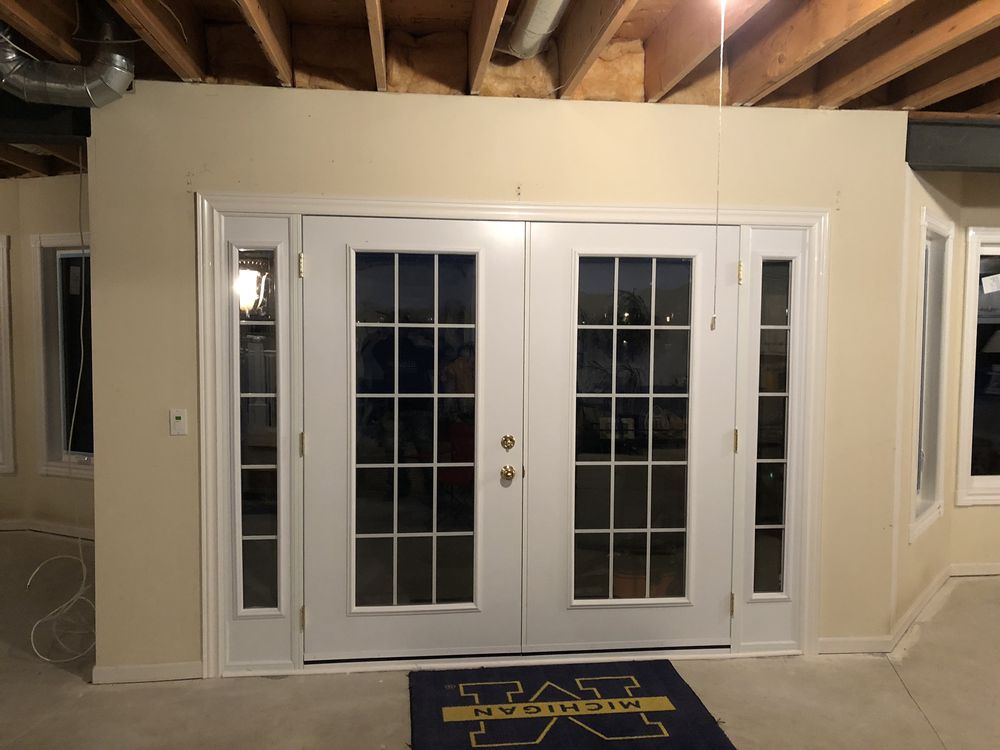
French doors are hinged doors that swing outward or inward, usually installed in pairs. This traditional design creates a wide opening when both panels swing open at the same time, giving you unrestricted access for moving furniture or creating gathering spaces.
French doors benefits include better ventilation control since both panels can open independently or together. The hinged construction allows for more elaborate locking systems and weather sealing compared to sliding tracks.
Choose sliding patio doors if:
Choose French doors if:
Both door types connect interior spaces to outdoor areas, but they serve different priorities. Sliding doors focus on space efficiency and modern aesthetics, working best in contemporary homes with limited floor area. French doors emphasize ventilation control and traditional elegance, performing best in spacious rooms with adequate swing clearance.
The physical differences between these door styles create different user experiences. Understanding how each door type manages space, airflow, and security helps you match the right solution to your home's specific needs.
Sliding doors provide limited ventilation since only half the doorway can be opened at a time. The fixed panel stays permanently in place while the operating panel slides across, limiting the maximum opening to about 50% of the total door width.
French doors require significant floor space for swing clearance. Each panel sweeps through an arc equal to its width, needing a clear floor area extending several feet into the room or onto the patio. Furniture placement, area rugs, and nearby walls must work around this swing path.
In rooms under 200 square feet, sliding doors let you place furniture within inches of the door without blocking operation. French doors need 3-4 feet of floor space clear in the swing path, which can feel restrictive in compact rooms.
French doors deliver better ventilation by opening both panels at the same time to create unrestricted airflow. This full-width opening allows cross-breezes to flow freely, improving natural cooling during mild weather and reducing air conditioning use.
When ventilation matters most:
Sliding doors restrict airflow to the width of one operating panel, typically half the total opening. While this limitation reduces ventilation effectiveness, the design still allows substantial air exchange compared to smaller windows.
Sliding doors generally offer less security than hinged doors. Track-based systems rely on simple latches and secondary locks, which intruders can sometimes defeat. Premium sliding systems add anti-lift devices and multi-point locking bars that significantly improve security performance.
French doors feature multi-point locking mechanisms that secure panels at top, middle, and bottom positions at the same time. This distributed locking resists forced entry more effectively than single-point latches. Home security upgrades enhance protection through impact-resistant glass and reinforced frames, regardless of door style.
Material selection affects door durability, insulation, maintenance requirements, and lifespan. Both patio and French doors come in similar material options, though construction methods vary between sliding and hinged designs.
| Material | Best For | Investment Level | Expected Outcomes |
| Vinyl | Budget-conscious homeowners, low-maintenance needs | $400-$1,200 | Minimal upkeep, adequate insulation, 20-30 year lifespan |
| Fiberglass | Harsh climates, premium performance | $1,500-$3,000 | Superior insulation, dimensional stability, 30-50 year lifespan |
| Wood-Clad | Traditional aesthetics with modern performance | $2,000-$4,000 | Natural interior beauty, weather-resistant exterior, requires periodic maintenance |
| Aluminum | Contemporary designs, coastal areas | $800-$2,000 | Corrosion resistance, slim profiles, lower insulation than other materials |
Vinyl sliding doors dominate the budget to mid-range market due to low cost and minimal maintenance. Vinyl frames resist moisture, never need painting, and provide adequate insulation for moderate climates.
Fiberglass and wood-clad options serve the premium segment with better insulation and authentic aesthetics. Fiberglass resists temperature extremes while maintaining dimensional stability, ideal for harsh Michigan winters.
| Material | Best For | Investment Level | Expected Outcomes |
| Wood | Traditional aesthetics, customization | $1,300-$3,500 | Classic appearance, natural insulation, requires regular maintenance |
| Steel | Maximum security, durability | $1,500-$4,000 | Dent-resistant, enhanced security, rust prevention needed at scratches |
| Fiberglass | Low maintenance, energy efficiency | $2,000-$5,500 | Minimal upkeep, excellent insulation, 30-50 year lifespan |
Wood French doors remain popular for their traditional appearance and natural insulation properties. Solid wood construction offers excellent structural strength and accepts custom staining or painting to match any design scheme.
Steel and fiberglass French doors provide enhanced durability with reduced maintenance compared to wood. Steel doors offer maximum security with dent-resistant panels. Fiberglass combines the appearance of wood grain with superior weather resistance and minimal maintenance requirements.
Energy efficiency depends primarily on glass specifications rather than door type or frame material. Triple-pane glass with low-E coatings and argon gas fills minimizes heat transfer regardless of whether panels slide or swing.
What makes doors energy efficient:
Premium fiberglass doors in either sliding or French configurations can last 30-50 years with minimal maintenance. Calculating potential energy savings helps justify investing in higher-quality materials that reduce heating and cooling costs over decades.
Buyer priorities shift based on home type, climate, budget, and lifestyle factors. Understanding these preference patterns helps predict which door style aligns best with your specific circumstances and long-term satisfaction.
Style and aesthetics rated important by 64% of buyers according to industry research. French doors appeal to homeowners seeking traditional elegance and architectural character that complements classic home designs.
Sliding patio doors attract buyers prioritizing contemporary aesthetics and unobstructed views. The minimal frame profiles and expansive glass areas support modern design principles. Transforming your home's appearance extends beyond individual door selection to coordinating window and door styles throughout the exterior.
Michigan's climate demands superior insulation, weather stripping, and condensation resistance to maintain comfort and control energy costs. Both door styles can meet these requirements when specified with appropriate glass packages and frame materials.
French doors often perform slightly better in extreme climates due to compression weather stripping. Hinged panels press firmly against weatherstripping when closed, creating superior air and water seals compared to sliding track systems. However, premium sliding doors with dual seals achieve comparable performance in properly installed applications.
Climate-specific features for Michigan:
Balance budget and maintenance when evaluating total ownership costs. French doors require periodic hinge lubrication and hardware adjustments to maintain smooth operation. Wood French doors demand additional maintenance including refinishing every 3-5 years to prevent deterioration.
Sliding door tracks require regular cleaning to ensure smooth operation. Debris accumulation in tracks causes binding, increases wear on rollers, and can damage weather stripping. Simple quarterly cleaning prevents most issues and extends door lifespan.
Maintenance frequency comparison:
Sliding doors need monthly track cleaning and annual roller lubrication. French doors require semi-annual hardware tightening and annual hinge lubrication. Both types need weather stripping inspection annually and replacement every 5-7 years.
Specific home layouts, architectural styles, and budget constraints favor one door type over the other. Matching door characteristics to your situation maximizes satisfaction and long-term value.
Compact rooms with limited floor space benefit most from sliding patio doors. The zero-clearance operation allows furniture placement immediately next to door panels without blocking operation.
Contemporary and modern home designs pair naturally with sliding door aesthetics. The horizontal lines, minimal frames, and expansive glass harmonize with modern architectural principles.
Best applications for sliding doors:
Traditional and colonial-style homes achieve visual cohesion with French door installations. The classic proportions and divided light patterns complement historical architectural details and formal interior designs.
Multi-generational households benefit from French door ventilation and accessibility advantages. The wide opening accommodates wheelchairs and walkers more easily than half-width sliding openings. Professional door installation in Novi demonstrates how custom configurations address specific accessibility requirements.
Best applications for French doors:
Sliding Patio Door Price Ranges:
French Patio Door Price Ranges:
The higher French door cost reflects more complex construction, additional hardware, and heavier frame requirements. Professional door installation in Plymouth ensures proper function and warranty compliance regardless of door type or budget level.
Proper installation and ongoing maintenance determine whether doors perform as designed throughout their expected lifespan. Both aspects significantly affect energy efficiency, security, and user satisfaction.
Poor installation leads to air leaks, structural damage, and compromised security. Improper shimming causes doors to bind or fail to latch correctly, while inadequate weather stripping creates energy-wasting drafts.
Professional installation ensures precise leveling, proper insulation, and code compliance. Licensed contractors possess specialized tools and experience to address irregular openings, structural reinforcement, and flashing details.
What professional installers provide:
Sliding Door Maintenance:
Sliding door tracks require regular cleaning to ensure smooth operation. Vacuuming tracks monthly and wiping with damp cloths prevents dirt accumulation that binds rollers and scratches glass. Annual lubrication of rollers with silicone spray maintains quiet operation and extends component lifespan.
Track cleaning takes 10-15 minutes quarterly and prevents 90% of sliding door operation problems. Use a vacuum with brush attachment to remove dirt, then wipe tracks with a damp cloth.
French Door Maintenance:
French door hinges need periodic adjustment and lubrication to prevent sagging and binding. Tightening hinge screws and applying lubricant annually keeps doors swinging smoothly and sealing properly. Weather stripping on both door types requires inspection and replacement every 5-7 years to maintain energy efficiency.
Both door types achieve 30-50 year lifespans when properly maintained and constructed from quality materials. Sliding doors face fewer moving parts and simpler mechanisms, potentially reducing long-term repair costs.
French doors experience more stress on hinges and locking hardware due to repeated swinging motion. Premium hinges and quality installation minimize problems, but hardware replacement represents the most common repair need.
Performance in thermal insulation and intrusion resistance varies based on specifications rather than door style alone. Understanding how to maximize both attributes helps optimize comfort, safety, and operating costs.
Energy efficiency rated essential or desirable by 83% of buyers according to industry surveys. Both door types achieve comparable thermal performance when specified with similar glass packages and frame materials. Triple-pane low-E glass with argon fills delivers U-factors below 0.30 regardless of sliding or hinged operation.
Air infiltration represents the primary performance difference between door types. French doors compress weather stripping when closed, potentially achieving tighter seals than sliding track systems. However, premium sliding doors with dual seals match French door air tightness when properly installed.
Security and strength rated important by 75% of buyers when selecting patio doors. French doors typically incorporate three-point locking systems that engage the frame at multiple heights at the same time. This distributed securing resists forced entry more effectively than single-point latches common on basic sliding doors.
Premium sliding doors offer secondary security features including anti-lift blocks and auxiliary foot locks. These enhancements significantly improve intrusion resistance compared to standard track latches.
Security feature comparison:
Sliding doors on premium models offer multi-point locking and anti-lift devices. French doors typically include standard multi-point systems with heavy-duty strike plates and integrated deadbolts. Both door types benefit equally from impact-resistant glass options.
Comfort depends on how effectively doors control temperature, noise, and air movement. French doors excel at ventilation control, allowing precise airflow adjustment by opening one or both panels. This flexibility helps maintain comfortable temperatures during transitional seasons without mechanical heating or cooling.
Sliding doors provide better sound isolation when closed due to compression against fixed panels. Both styles contribute to strategies that open up home windows by increasing natural light and visual connections to outdoor spaces.
When you choose Alexandria Home Solutions for your door installation, you work with Michigan's premier home improvement contractor, committed to your complete satisfaction. We understand that selecting between patio doors and French doors affects your daily comfort, security, and home value.
We don't use high-pressure sales tactics or push products that don't fit your needs. Our free in-home consultation focuses on understanding your space constraints, design preferences, budget, and long-term goals. We walk you through material options, explain performance differences, and provide transparent pricing with flexible financing options.
What sets our process apart:
You should choose Alexandria Home Solutions when you want a contractor who treats your home with the same care and respect we'd give our own. Our team of experienced professionals brings decades of combined expertise to every installation, ensuring your doors perform flawlessly for years to come.
We're not the right choice if you're looking for the absolute lowest price with no regard for quality or longevity. We use only premium materials from reputable suppliers because we stand behind our work with comprehensive warranties.
Your final decision should balance space constraints, ventilation needs, aesthetic preferences, and budget realities. Sliding patio doors excel in compact spaces requiring contemporary styling and zero floor clearance, while French doors suit traditional homes where maximum ventilation and classical elegance justify higher costs and swing space requirements.
Both door types enhance indoor-outdoor connectivity and increase home value when matched appropriately to your home's architecture and your lifestyle priorities.
Consider these questions:
Alexandria Home Solutions helps Michigan homeowners select and install the optimal door solution for their specific needs. Professional guidance ensures your investment delivers the performance, appearance, and durability you expect.
Ready to improve how your home connects to outdoor living spaces? Explore our professional services to discover custom solutions that enhance your comfort, security, and home's beauty throughout every season.