Key Takeaways:
Michigan's 4.67 million housing units create sustained demand for door replacement, particularly in older homes requiring weatherization and security upgrades. Understanding door replacement cost Michigan variables helps homeowners allocate budgets effectively across entry, patio, and storm door categories while selecting materials that withstand freeze-thaw cycles and wind exposure.
The state's 73.2% owner-occupancy rate and predominantly single-family housing stock drive replacement decisions focused on durability, energy retention, and contractor credibility rather than sticker price alone. Homeowners balance upfront investment against long-term performance, especially in regions where 47% of housing units predate 1970 and require cold-climate detailing.
Michigan door replacement divides into three functional categories, each serving distinct performance and aesthetic roles in residential exteriors. Entry doors address security and curb appeal, patio doors enhance daylight and outdoor access, and storm doors provide secondary weather barriers.
Regional demand reflects climate priorities and housing characteristics unique to Great Lakes conditions. Replacement patterns favor products that reduce heat loss, resist moisture infiltration, and accommodate aging infrastructure without extensive structural modification.
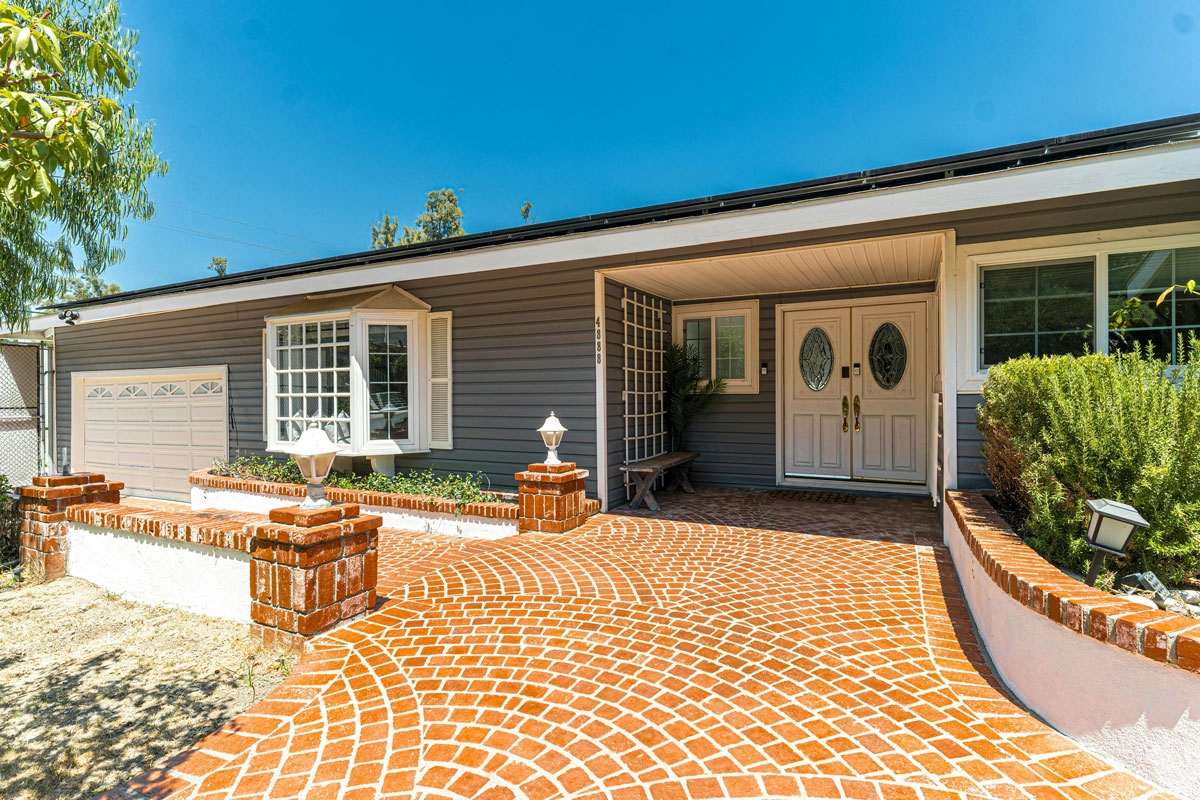
Entry doors represent approximately 50% of estimated Michigan replacement demand due to their universal presence in single-family homes. These primary-access units combine security hardware, insulated cores, and decorative glass options to balance protection with visual appeal.
Construction typically uses steel or fiberglass skins over foam cores, while premium models feature stile-and-rail wood or engineered wood assemblies. Best materials for your exterior door selection depends on exposure, maintenance tolerance, and architectural style compatibility.
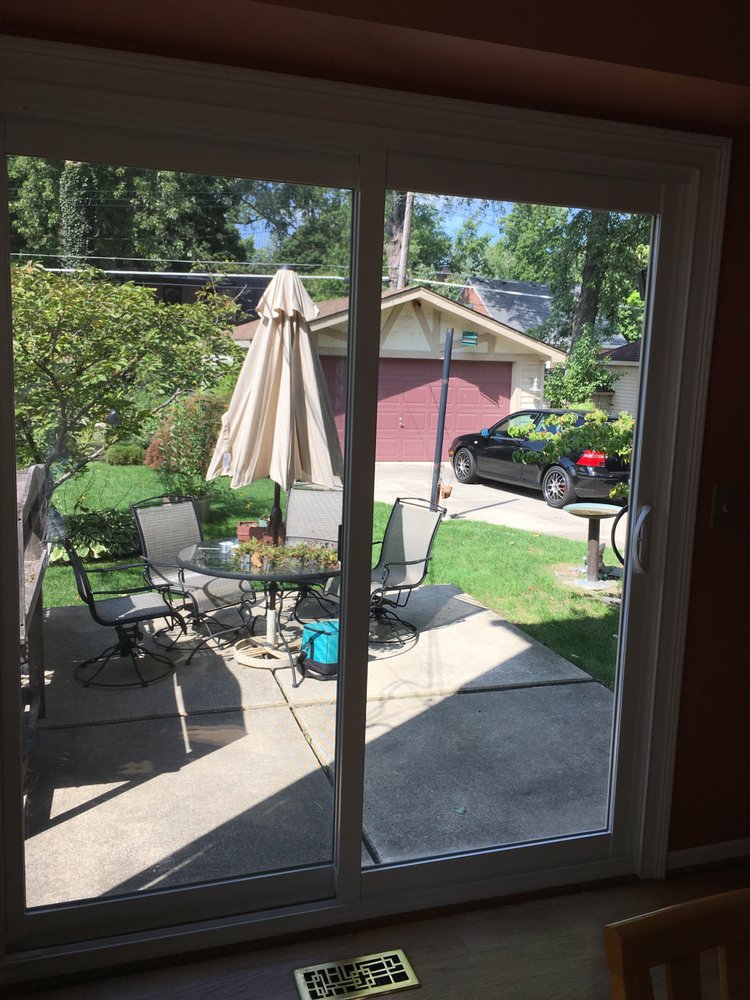
Patio doors account for roughly 30% of Michigan replacement activity, serving as light-admission and circulation gateways between interior spaces and outdoor areas. Sliding configurations use insulated glass panels in vinyl, aluminum, wood, or fiberglass frames, while French/hinged units employ swinging panels.
Both formats increase perceived home value and buyer desirability, with 64% of recent and prospective buyers rating each type essential or desirable. Installation complexity and higher glass area elevate patio door installation cost compared to entry-door projects, particularly when structural modifications or custom sizing is required.
Storm doors comprise approximately 20% of Michigan door replacement demand, functioning as cost-effective weatherization upgrades for older homes and budget-conscious efficiency improvements. These secondary barriers use aluminum or vinyl frames with interchangeable glass and screen inserts to control ventilation, reduce infiltration, and protect primary entry doors.
Better models incorporate steel or wood components for enhanced rigidity and longevity. Storm door budget Michigan considerations favor this category when homeowners seek measurable performance gains without primary-door replacement expenses.
Michigan's freeze-thaw cycles, wind exposure, and heavy snow loads accelerate door degradation and air-leakage pathways that undermine heating efficiency. Replacement addresses structural failure, weatherstrip wear, and outdated insulation standards common in pre-1970 housing stock.
Climate-driven replacement also responds to ice-dam conditions, moisture intrusion, and thermal bridging that increase utility costs and reduce interior comfort. Weatherproofing your exterior doorbecomes essential in regions experiencing temperature extremes and prolonged heating seasons.
Temperature swings create expansion and contraction stresses that compromise door alignment, seal integrity, and hardware function over time. Materials must resist warping, cracking, and moisture absorption while maintaining dimensional stability across seasonal extremes.
Wind-driven rain and snow require robust threshold details, properly integrated flashing, and multi-point locking systems that prevent water infiltration and air leakage. Proper installation technique matters as much as product selection for long-term weather performance.
Energy efficiency directly impacts heating costs in Michigan's extended winter season, where inefficient doors contribute to measurable utility-bill increases. Insulated cores, low-emissivity glass, and continuous weatherstripping reduce conductive and convective heat loss.
Weather protection extends beyond thermal performance to include structural water management, condensation control, and resistance to impact damage from wind-borne debris. Upgrading to modern door systems can improve airtightness and sound attenuation while reducing maintenance burdens.
Forty-seven percent of Michigan housing units were built before 1970, predating contemporary energy codes and weather-detailing standards. These older homes often feature single-pane storm doors, uninsulated entry doors, and worn threshold assemblies that fail to meet current performance expectations.
The 3.2 million single-family homes in the state create sustained replacement demand as homeowners address deferred maintenance and pursue comfort improvements. Owner-occupancy rates of 73.2% support investment in durable upgrades rather than short-term repairs.
Consumer priorities emphasize appearance, durability, and price in varying order depending on door type and household life stage. Sixty percent of recent and prospective buyers rate decorative-glass entry doors as essential or desirable, while 57% cite long-lasting performance as a primary influence for front-entrance upgrades.
Price influences 47% of front-entrance decisions, trailing both aesthetics and durability in typical hierarchy. Fiberglass vs steel doors comparisons reflect these trade-offs between upfront cost, maintenance requirements, and life-cycle value.
Attractive appearance leads entry-door selection criteria, followed closely by long-lasting performance expectations in Michigan's demanding climate. Curb appeal drives initial consideration, while material durability and warranty coverage influence final purchasing decisions.
Entry door price estimate calculations must account for installation quality, hardware upgrades, and finish options that affect both cost and longevity. Homeowners increasingly recognize that professional installation prevents alignment issues and moisture intrusion that undermine product performance.
Both sliding and French/hinged patio doors receive 64% essential-or-desirable ratings from homebuyers, indicating strong mainstream appeal across configurations. Sliding units offer space efficiency and simple operation, while hinged units provide wider clear openings and traditional aesthetics.
Usability factors include smooth glide mechanisms, integrated blinds, and low-threshold profiles that accommodate aging-in-place preferences. Visual impact remains critical in suburban and move-up markets where patio doors serve as focal points in kitchen and living-room renovations.
Storm doors deliver measurable efficiency improvements at lower investment than full entry-door replacement, making them attractive for budget-driven weatherization projects. Secondary protection reduces direct weather exposure on primary doors, extending service life and improving airtightness.
Ventilation control through interchangeable glass and screen panels adds seasonal flexibility without compromising security. In older Michigan homes, storm doors compensate for outdated entry-door insulation without structural modification or extensive finish work.
Entry-door costs span $150–$600 for budget units, approximately $1,455 installed for mid-range options, and $2,375–$3,000+ for premium materials and custom configurations. Patio-door pricing ranges from $600 budget options to mid-range averages around $2,500 and premium systems approaching $10,000.
Storm-door expenses run $175–$300 for basic models, about $642 for mid-grade units, and $1,100–$1,800 for premium constructions. Door installation in Farmington Hills projects typically reflect mid-range to premium tiers due to established-neighborhood expectations and contractor availability.
Budget entry doors use standard steel or fiberglass skins with basic weatherstripping and builder-grade hardware, suitable for straightforward replacements without customization. Mid-range selections add decorative glass, upgraded locksets, and improved insulation cores that balance cost and performance.
Premium entry doors incorporate solid wood, architectural glass designs, and multi-point locking systems that command higher installed prices. Patio doors follow similar progression, with vinyl-framed sliding units at budget tier, wood or composite frames at mid-range, and custom European-style systems at premium.
Professional installation ensures proper shimming, threshold sealing, and weatherstrip compression that prevent air leakage and water infiltration over service life. Labor costs typically represent 30–50% of total project expense, varying with opening preparation requirements and finish carpentry complexity.
Poor installation undermines even premium products through misalignment, inadequate flashing, and compromised thermal breaks. Homeowners should verify contractor licensing, insurance coverage, and workmanship warranties before accepting lowest-bid proposals.
Entry-door replacement in Michigan typically falls between $1,200 and $3,000 installed for mainstream residential projects, with luxury materials and custom sizes exceeding $5,000. Patio-door installations average $2,500–$4,000 for standard vinyl or aluminum sliding units, while wood French doors often reach $6,000–$10,000.
Storm-door projects generally cost $400–$800 installed, including removal of existing units and minor trim adjustments. Regional labor rates and material availability influence final pricing, particularly in suburban Detroit markets and northern Michigan communities with limited contractor density.
Contractor selection should prioritize reputation, credentials, and transparent pricing over lowest-bid proposals, as 92% of homeowners identify outstanding track record as the primary selection driver. Licensing verification, insurance confirmation, and safety-record review precede price negotiation in credible vetting processes.
Written quotes, clear scope definitions, and itemized cost breakdowns prevent misunderstandings and scope creep. Choosing the perfect exterior doorinvolves evaluating both product specifications and installation-quality guarantees that protect long-term investment.
Ninety percent of homeowners prioritize strong safety records when selecting contractors, while 89% value licenses or certifications that demonstrate technical competency and regulatory compliance. Proof of general liability and workers' compensation insurance protects homeowners from liability exposure during installation.
Manufacturer certifications and specialized training indicate familiarity with product-specific installation requirements and warranty procedures. Requesting references and verifying complaint history through state agencies and Better Business Bureau records adds prudent due diligence.
Eighty-eight percent of homeowners want quotes at initial consultations, while 65% respond positively to transparent pricing displayed online or in marketing materials. Itemized proposals that separate material, labor, disposal, and finish costs enable informed comparison across multiple bidders.
Written contracts prevent verbal-promise disputes and clarify payment schedules, project timelines, and change-order procedures. Seventy-six percent cite price as a selection factor, but it ranks below reputation and credibility in typical decision hierarchies.
High-pressure "sign now" tactics, demands for cash payment, or requests for full payment upfront signal potential scam behavior according to Michigan Attorney General consumer alerts. Inability to provide references, vague material specifications, or reluctance to discuss warranties indicate inadequate professionalism.
Absence of online reviews, poor complaint histories, or unlicensed operation violate baseline credibility standards. Contractors unable to answer questions about cold-climate detailing, underlayment integration, or system-performance expectations suggest product-only focus rather than comprehensive installation expertise.
Door replacement often coordinates with siding, window, and roofing projects to optimize exterior-envelope performance and achieve consistent aesthetic updates. Comprehensive exterior upgrades address air-sealing, moisture management, and thermal-bridging concerns more effectively than isolated component replacements.
Financing strategies and contractor selection become more efficient when multiple exterior projects share planning, permitting, and mobilization costs. 2025 Michigan energy rebate programs may apply to qualifying efficiency improvements, reducing net project expenses.
Integrated exterior-envelope improvements eliminate thermal discontinuities, drainage conflicts, and finish transitions that compromise individual-component performance. Coordinating door installation with siding or window replacement ensures proper flashing laps, trim alignment, and cohesive color palettes.
Single-contractor accountability for multiple components reduces finger-pointing over warranty claims and simplifies project management. Combined projects often qualify for volume pricing, streamlined scheduling, and bundled financing that improve overall value.
Thirty-two percent of Michigan residents live in small towns or villages, 27% in suburbs, 25% in major cities, and 16% in rural areas, creating distinct contractor-availability and product-preference patterns. Rural homeowners prioritize durability and local-service access, while urban buyers emphasize aesthetics and scheduling predictability.
Suburban markets support wider material selections and competitive pricing due to contractor density and showroom proximity. Small-town and rural locations may experience longer lead times and limited installer options, favoring established relationships and referral-based hiring.
Seventy-seven percent of Millennials plan major home projects within five years, averaging $14,199 annual home-project spending that supports premium-tier door investments. Established homeowners aged 51 and older represent 53% of survey respondents, often prioritizing low-maintenance materials and contractor reliability.
Financing options through home-equity lines, personal loans, or contractor payment plans enable larger projects without cash-flow constraints. Replacement patterns increasingly favor comprehensive exterior renewals over incremental repairs as deferred-maintenance backlogs accumulate.
Entry doors dominate replacement activity due to universal presence, high visibility, and security functionality that affects every occupied dwelling. Patio doors follow as discretionary upgrades that enhance living spaces and support indoor-outdoor lifestyle preferences.
Storm doors occupy the weatherization niche, offering cost-effective performance gains without structural modification or extensive labor. Door installation in Orchard Lake markets typically reflect higher patio-door share due to affluent demographics and established-neighborhood preferences.
Entry doors account for approximately 50% of Michigan replacement demand, reflecting their essential function and broad applicability across all housing types. Patio doors represent roughly 30% of activity, concentrated in suburban and move-up markets with discretionary-improvement budgets.
Storm doors comprise about 20% of replacement volume, driven by cold-climate relevance and budget-conscious efficiency priorities. Share estimates derive from contractor purchase patterns, buyer-preference surveys, and climate-driven product appropriateness rather than direct Michigan sales data.
Fifty-three percent of Michigan homeowner survey respondents are age 51 or older, with 25% in the 51–60 cohort and 19% in the 61–70 range, favoring low-maintenance materials and proven contractor relationships. Millennial buyers prioritize durability and energy efficiency, willing to invest in premium products that reduce long-term operating costs.
Community-type preferences—28% small town, 26% rural, 24% suburb, 22% city among homeowners—influence product mix and contractor-selection criteria. Rural and small-town buyers emphasize referrals and local availability, while urban buyers prioritize scheduling flexibility and online reviews.
Decorative glass continues gaining share as 60% of buyers rate it essential or desirable, supporting the trend toward personalized entry-door aesthetics beyond solid-panel formats. Sliding and French patio doors maintain equal 64% desirability ratings, indicating parallel demand for both space-saving and traditional configurations.
Fiberglass and composite materials capture market share from wood and basic steel through superior weather resistance and reduced maintenance requirements. Architectural styling preferences favor craftsman, modern farmhouse, and transitional designs that align with broader residential-construction trends.
Michigan's doors market reached an estimated $477.0 million in 2023, projected to grow to approximately $527.3 million by 2026 and $623.3 million by 2031 at a 3.4% compound annual growth rate. Replacement demand stems from the state's aging housing stock, climate-driven performance requirements, and homeowner prioritization of durability over lowest upfront cost.
Consumer behavior rewards contractor reputation, licensing, and transparent pricing more than bargain bids, with 92% prioritizing track record and only 76% citing lowest price as a selection factor. Michigan homeowners increasingly view exterior doors as integrated envelope components rather than isolated replacements, coordinating installations with broader weatherization and curb-appeal projects for optimal value and performance.
Alexandria Home Solutions supports Michigan homeowners through the door-selection and installation process with licensed professionals, comprehensive warranties, and transparent pricing that aligns with informed decision-making priorities. Whether upgrading entry security, enhancing patio functionality, or adding storm-door protection, proper contractor selection ensures installations perform reliably across Michigan's demanding climate conditions.
Ready to explore door replacement options tailored to your home's needs and Michigan's weather challenges? Contact our teamfor a no-pressure consultation and detailed project quote.