Key Takeaways:
Southfield homeowners face unique exterior challenges. Michigan's freeze-thaw cycles, severe storms, and temperature extremes demand siding that performs year-round. Traditional materials like vinyl and wood increasingly fail to meet these demands, driving more property owners toward fiber cement solutions. This guide examines why Hardie Board has become the preferred choice for durability, performance, and long-term value in Southeast Michigan.
Fiber cement siding represents engineered building science applied to exterior protection. Unlike traditional materials, this product combines specific components designed for extreme weather performance.
Hardie Board consists of cement, sand, and cellulose fibers. This combination creates a dense composite that resists thermal transfer and withstands impacts. The cement base provides fire resistance while cellulose fibers add tensile strength without wood's vulnerability.
James Hardie leads the fiber cement industry with climate-specific engineering. Their HZ5® product line targets northern climates with seasonal variations, freezing temperatures, and snow loads. The company conducts rigorous testing including simulated hail impacts and manufactures integrated components like HardieWrap® Weather Barrier for complete system compatibility.
Fiber cement delivers 30–50 years of service life with proper installation. The material maintains structural integrity from below zero to above 100°F. HZ5® products resist cracking, moisture absorption, and delamination from snow and ice. With appropriate care, installations can exceed 50 years—double or triple vinyl's lifespan. When considering siding options, material longevity impacts total ownership costs significantly.
Michigan weather creates aggressive conditions for exterior materials. Understanding these forces helps homeowners select appropriate protection for their investment.
Water penetrates behind siding through gaps and seams. When temperatures drop below freezing, trapped moisture expands by approximately 9%, exerting tremendous pressure on panels. Repeated cycling weakens material structure until cracks form. Vinyl becomes brittle below 20°F, making it vulnerable to impact damage. Foundation shifting compounds the problem—freeze-thaw cycles cause soil expansion that stresses fasteners and creates separation points where moisture enters.
Trapped moisture behind siding creates ideal conditions for mold and structural decay. Wood framing exposed to consistent dampness begins rotting within months. The City of Southfield enforces Michigan Building Code requirements for moisture barriers. Professional contractors must implement proper house wrap installation and seal all penetrations to prevent damage to structural elements.
Southfield experiences elevated wind speeds from October through May, averaging over 10.6 mph. January brings peak conditions at 18.2 mph average. Severe thunderstorms generate gusts up to 60 mph. Doppler radar detected hail at or near Southfield on 28 occasions within the past year, with 37 severe weather warnings recorded. Analysis indicates 100% of Southfield homes face measurable wind risk, with average maximum speeds increasing over three decades.
Existing siding installations show predictable failure patterns driven by material limitations and Michigan climate stress.
Vinyl lacks structural stability across temperature ranges. Cold makes it brittle; heat causes warping. Michigan's freeze-thaw cycling exploits this weakness—panels crack parallel to boards or in distinctive half-circle patterns. UV exposure fades colors unevenly. Hail impact creates chips and holes even from penny-sized stones. The material wasn't engineered for northern climate extremes.
Wood requires painting or sealing every 3–7 years to prevent moisture penetration. Without this protection, rot accelerates. Termites and carpenter ants exploit damaged sections while mold establishes on damp surfaces. Hail gouges wood grain, creating moisture entry points. The 20–30 year lifespan depends entirely on consistent maintenance. For comprehensive guidance on material selection, review this siding selection guide.
Wood costs $6–12 per square foot initially but demands constant investment. Each painting cycle runs thousands of dollars. Rot repairs require board replacement—labor-intensive work that disrupts landscaping. Over 20 years, repair frequency intensifies as material degrades. Total lifecycle costs often exceed higher-quality materials installed correctly from the start.
Fiber cement addresses the fundamental weaknesses that cause vinyl and wood to fail in Michigan conditions.
The material contains no organic compounds that support biological decay. Termites cannot digest cement-based products. Moisture resistance prevents conditions mold requires. Fire resistance comes from the cement matrix—fiber cement won't ignite or contribute fuel to flames. These properties eliminate entire categories of maintenance and damage common to wood.
Fiber cement maintains structural integrity from -40°F to 120°F without becoming brittle in cold or warping in heat. The 30–50 year lifespan exceeds vinyl's 40-year maximum, but more importantly, performance doesn't degrade at the same rate. Dense composition provides superior impact resistance against hail and wind-blown debris—critical factors in Michigan.
Fiber cement's dense structure absorbs impact energy without fracturing. Testing demonstrates resistance to golf-ball-sized hail that would shatter vinyl. Wind-blown debris that dents aluminum or chips vinyl leaves minimal marks on fiber cement. Superior impact resistance maintains weatherproof integrity longer than lightweight alternatives.
Long-term performance separates premium materials from economy options. Fiber cement excels in extended service under stress.
The material maintains dimensional stability through temperature extremes. HZ5® engineering specifically targets climates with seasonal variation, freezing temperatures, and snow loads. Unlike vinyl, fiber cement resists freeze-thaw cycling without cracking. The product performs consistently whether temperatures swing 50°F in 24 hours or remain below freezing for weeks.
Fiber cement requires repainting every 10–15 years under normal conditions, with high-quality paint extending this to 20 years. The cement surface provides superior mechanical bonds compared to vinyl's smooth plastic. ColorPlus® Technology pre-finishes boards with baked-on coatings formulated for regional climate performance. The substrate doesn't expand and contract like wood, preventing paint film failure. Understanding the impact of new siding extends beyond initial installation to decades of performance.
Fiber cement exhibits minimal thermal expansion compared to vinyl or wood. For large installations, James Hardie provides expansion coefficients in technical bulletins. Moisture movement also stays minimal—the material doesn't swell like wood when wet. Dimensional stability maintains weatherproof joints and prevents the gaps that develop as other materials cycle through seasons.
Siding contributes to overall thermal performance, though its impact varies by system design and installation quality.
R-values per inch reveal insulation capacity: fiber cement 0.5–0.8, standard vinyl 0.6–0.8, wood 0.8–1.2, and insulated vinyl 2.0–5.0. Individual values seem small, but cumulative effect across hundreds of square feet impacts heating and cooling loads measurably. Fiber cement combined with exterior foam boards creates highly efficient wall assemblies.
Proper installation with appropriate moisture barriers creates an effective building envelope. Fiber cement's dimensional stability maintains tight joints that prevent air infiltration. Professional installation with sealed penetrations and proper flashing significantly reduces drafts compared to deteriorated existing siding. Energy savings come from eliminating infiltration points rather than material R-value alone.
Modern siding addresses both thermal performance and moisture control—two critical building science factors. Combining fiber cement with exterior insulation creates energy-efficient walls while preventing moisture problems. This dual benefit appeals to homeowners seeking reduced utility bills. Energy-efficient installations increase marketability because buyers recognize lower operating costs.
Aesthetic versatility matches functional performance. Fiber cement replicates traditional materials while eliminating their maintenance burdens.
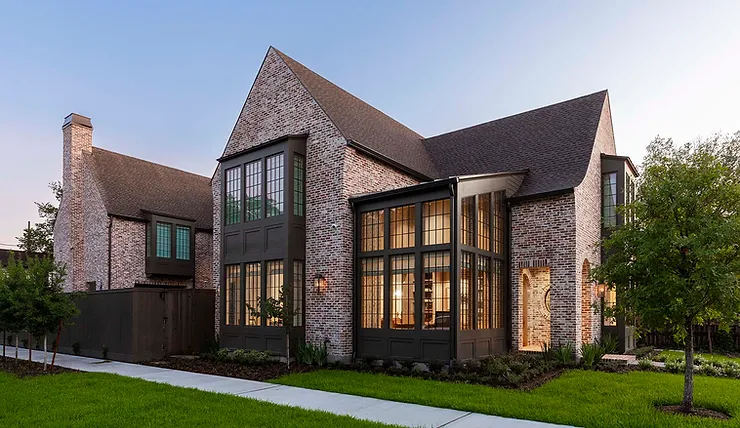
Board & batten creates rustic character. Traditional plank delivers craftsman aesthetics with smooth textures and crisp shadow lines. Fiber cement mimics brick styles from VintageBrick to ModernBrick without masonry costs. Stacked stone appearance suits contemporary designs. James Hardie's products include HardiePlank® lap siding, HardieArtisan® with deep shadow lines, HardiePanel vertical siding, and HardieShingle that mimics cedar. Specialty options include high-gloss black panels resembling metal cladding.
The material mimics wood species from redwood to cedar with accurate grain patterns and textures. Visual appeal matches natural wood without susceptibility to rot, insects, or moisture damage. This combination proves particularly valuable in historic neighborhoods where appearance standards matter but maintenance budgets don't support wood's demands.
Southfield features substantial Mid-Century Modern architecture from the 1950s and 1960s. These homes emphasize clean lines, minimalism, and indoor-outdoor integration. Common elements include curtain wall construction, covered entries, and low-sloping rooflines. Current city guidelines encourage low-impact development practices like bioswales that enhance sustainability and curb appeal. Maintaining architectural character while upgrading performance requires materials offering both aesthetic compatibility and superior weather resistance.
Understanding complete project costs helps homeowners budget appropriately and compare options accurately.
Michigan installations run $18–26 per square foot. The Detroit area averages $6–10 per square foot for typical homes, while Ann Arbor pricing reaches $31–36 per square foot. Labor intensity drives costs—fiber cement requires specialized tools and safety equipment. Project size affects per-unit pricing through economies of scale. Architectural complexity and material selection impact final costs.
Fiber cement costs up to $13 per square foot. Vinyl runs $3–8 per square foot with the lowest upfront investment. Wood ranges $6–12 per square foot. However, comparing only initial costs misses the complete picture. Total lifecycle costs often favor fiber cement despite higher installation expenses. For professional guidance on material costs and options, explore available services.
Initial price differences narrow considerably over time. Wood's frequent repainting cycles cost thousands per application. Vinyl's shorter lifespan means earlier replacement. Fiber cement's moderate maintenance—repainting every 10–15 years—costs less than wood's intensive schedule. The 30–50 year lifespan often outlasts the homeowner's occupancy. High-performance materials enhance property values more than economic options.
Installation quality determines whether premium materials deliver their designed performance. Fiber cement demands precision that untrained installers rarely achieve.
Improper moisture barriers allow water infiltration causing panel damage and mold. Failing to seal penetrations compromises weatherproofing. Inadequate clearances trap moisture. Poor flashing around openings creates leak points. Incorrect board spacing prevents thermal expansion accommodation. Using wrong nail types causes blowouts at attachment points. Any deviation from manufacturer specifications voids warranties—expensive mistakes that undermine the material's advantages.
Fasteners must be corrosion-resistant—hot-dipped galvanized or stainless steel. Pneumatic installation with proper pressure drives fasteners flush without overdriving. Wrong nail types cause panel fractures. Insufficient penetration allows wind to tear panels loose. Near coastal or high-humidity areas, stainless steel fasteners prevent rust. Product evaluations specify fastener types and spacing for design wind loads.
James Hardie offers 30-year limited warranties contingent on installation compliance. Improper installation—wrong clearances, faulty flashing, improper nailing, unsealed joints—voids coverage. Given Midwest weather severity, certified installers who understand climate-specific requirements become essential. Without correct installation, homeowners bear all costs for premature failure even when materials meet specifications.
Recognizing failure indicators helps homeowners act before minor problems become structural damage.
Gaps between panels indicate fastener failure. Loose or missing sections expose sheathing to weather. Cracks—especially parallel splits or half-circle patterns in vinyl—signal material breakdown. Warping and buckling suggest moisture damage. Visible rot, mold, or water stains indicate trapped moisture. Annual fall inspections catch these issues early before requiring expensive structural repairs.
Coordinating siding with related systems maximizes value and minimizes disruption. Gutter maintenance prevents water overflow. Proper attic ventilation stops ice dams. Installing high-quality house wrap creates proper moisture barriers. Water-resistive barriers meet Michigan Building Code requirements. Minimum 4×4-inch Z-flashing and kickout flashing direct water away from wall assemblies. Combining these upgrades during siding replacement delivers comprehensive protection more economically than separate projects.
Fiber cement installs successfully during Michigan winters—a significant advantage. Some adhesives require minimum temperatures for proper curing, and cold makes fiber cement more brittle, demanding careful handling. Michigan contractors install throughout most winter months. Spring and fall offer ideal conditions, but winter installation remains viable with experienced contractors.
Market trends reflect accumulated experience with material performance in real-world Michigan conditions.
Fiber cement delivers 30–50 years versus vinyl's 40 years and wood's 20–30 years. Maintenance demands differ—vinyl needs minimal care, fiber cement requires repainting every 10–15 years, wood demands painting every 3–7 years. Weather resistance proves superior in fiber cement for freeze-thaw cycling, impact resistance, and moisture management. Michigan's challenging climate exposes material weaknesses that milder regions tolerate.
Buyers prioritize durability, fire resistance, pest immunity, and extended lifespan over initial cost savings. Well-maintained modern siding signals overall home care. Neutral tones combined with traditional profiles appeal to broad buyer demographics. The psychological impact of low-maintenance, high-quality exteriors reduces negotiation pressure. Homeowners investing long-term recognize that fiber cement's higher initial cost pays dividends through reduced maintenance and superior performance.
Michigan homeowners increasingly prioritize weather resistance alongside aesthetics. Fiber cement's ability to replicate wood or masonry without maintenance burdens proves compelling. Known longevity and minimal upkeep attract busy homeowners and those aging in place. As awareness grows about lifecycle costs versus initial expenses, more homeowners choose proven performers over economic alternatives.
Informed decision-making requires understanding both material capabilities and installation requirements.
Conduct fall inspections checking for gaps and cracks. Understand that cut edges require immediate sealing with Universal Edge Sealer. Verify contractors use manufacturer-recommended materials. Determine if rainscreen systems make sense for your exposure. Confirm installers follow proper storage procedures. Ask about silica dust control during cutting. Verify compliance with Michigan Building Code requirements. These questions reveal installer expertise and project planning thoroughness.
Return on investment varies by market. Detroit shows 73.8% cost recovery. East North Central region achieves 101.2%. National averages reach 113.7%. Some markets see approximately 114% recovery—ranking among top renovation investments. Fiber cement recovers about 88% versus vinyl's 82%. High-quality materials positively impact appraisals, particularly when enhancing energy efficiency. To discuss your specific situation, contact experienced professionals who understand regional market dynamics.
Proper installation protects both investment and warranty coverage. City of Southfield enforces specific clearance requirements: minimum 1/4-inch roof-to-wall, 2-inch deck-to-wall, 6-inch ground-to-siding. Adjacent grades must slope away from buildings. Building envelope integration requires coordination between siding, moisture barriers, flashing, and trim. Comprehensive planning identifies requirements upfront, preventing change orders and installation delays. Thorough planning ensures decades of proper performance.
Michigan's demanding climate requires siding solutions backed by professional expertise and proven performance. Fiber cement delivers the durability, weather resistance, and long-term value Southfield homeowners need—but only when installed correctly by experienced contractors who understand regional building science requirements.
Alexandria Home Solutions specializes in fiber cement siding installation for Southeast Michigan homes. Our certified installers ensure proper moisture barriers, correct flashing details, and manufacturer-compliant fastening that protects your warranty and your investment. Schedule a consultation today to discuss how Hardie Board siding can enhance your home's protection, appearance, and value for decades to come.