Key Takeaways:
Return on investment separates smart remodeling from wasteful spending. Michigan homeowners face unique market conditions—harsh winters, regional buyer preferences, and distinct submarkets from Detroit to Ann Arbor. Understanding which projects deliver measurable value recovery guides budget allocation and project selection. ROI data reveals which improvements buyers pay for and which merely satisfy personal taste.
This guide examines Michigan's top five ROI-driving remodeling categories using regional cost data and recovery rates. Whether preparing for sale or building long-term equity, these projects offer the strongest financial returns in Southeast Michigan markets.
ROI measures how much property value increases relative to remodeling costs. It's expressed as the percentage of cost recovered at resale. A $20,000 kitchen remodel adding $17,000 in home value delivers 85% ROI. Understanding this metric helps prioritize projects delivering real financial returns versus those serving purely personal preferences.
ROI divides resale value added by total project cost. A garage door costing $4,467 that adds $6,655 in value delivers 149% return. National remodeling ROI increased 5.2% in 2024, reflecting strong demand for updated homes. This rising trend benefits Michigan homeowners investing strategically in high-return projects.
Calculation requires honest property valuation before and after improvements. Appraisers assess what comparable buyers pay for specific features. Overestimating added value leads to disappointed sellers learning their personal taste doesn't translate to market demand.
Appraisers compare your improved home to recent sales of similar properties. If comparable homes with updated kitchens sell for $15,000 more than those without, that's your kitchen's approximate value contribution. The 2024 Cost vs. Value Report from JLC Online/Zonda, along with NAHB data, Bureau of Labor Statistics regional information, and Michigan Remodelers Association benchmarks establish authoritative ROI figures.
Buyer trends shift ROI over time. Open floor plans commanded premiums a decade ago but now represent standard expectations. Today's high-ROI features—energy efficiency, home offices, outdoor living spaces—reflect current buyer priorities. Regional data captures these trends better than national averages.
Detroit proper, Ann Arbor, Bloomfield Hills, Troy, and broader Southeast Michigan show distinct ROI patterns. Ann Arbor's educated buyer base values different features than Detroit's first-time homebuyers. Bloomfield Hills luxury market tolerates higher-end finishes that would over-improve homes in modest neighborhoods.
Submarkets within Metro Detroit vary significantly. Gentrifying neighborhoods reward cosmetic updates strongly. Established suburbs expect certain amenities as baseline—lacking them penalizes value more than having them adds value. Understanding your specific market context determines which projects deliver optimal returns.
Project selection requires analyzing multiple factors simultaneously. Cost alone doesn't predict returns—a $5,000 project might deliver better ROI than $50,000 spending. Market demand, execution quality, and neighborhood expectations all influence value recovery. Systematic evaluation prevents expensive mistakes.
Study recent sales in your immediate area. Which features appear consistently in higher-priced homes? What updates do successful flippers prioritize? These patterns reveal what local buyers value. Older homes warrant 15-20% contingency allocations for hidden issues, affecting project budgets and ROI calculations.
Match improvement level to neighborhood norms. Premium granite countertops in a laminate-counter neighborhood waste money. Conversely, basic updates in high-end areas leave value on the table. Walk competing properties at open houses to calibrate appropriate finish levels.
Michigan's harsh winters make energy efficiency critical to buyers. Updated windows, quality insulation, and efficient HVAC systems deliver stronger ROI here than in temperate climates. Four distinct seasons also make outdoor living spaces valuable—buyers imagine summer deck use despite viewing homes in February.
Weather-resistant materials command premiums in Michigan markets. Fiber-cement siding outperforms vinyl in perceived quality and longevity. Proper ventilation in bathrooms prevents moisture damage from cold-weather condensation. Climate-appropriate choices protect both immediate ROI and long-term value preservation.
Selling within two years demands high-ROI cosmetic updates. Long-term ownership allows amortizing lower-ROI projects across years of personal enjoyment. Quick cosmetic refreshes—paint, fixtures, hardware—deliver immediate returns for minimal investment. Major renovations require multi-year timelines to justify their costs.
Scope management prevents over-improvement. A $15,000 bathroom remodel might recover 70%, while a $40,000 luxury bathroom in the same home recovers only 50%. The incremental $25,000 spent on premium features rarely returns proportionate value. Strategic scope targeting maximizes dollar-for-dollar returns.
Kitchens influence buying decisions disproportionately. Buyers emotionally connect with kitchen spaces and justify higher offers for updated layouts and appliances. Michigan's family-oriented demographics amplify kitchen importance—multiple generations gathering during long winters make functional kitchens essential.
Updated kitchens shorten market time and expand buyer pools. Homes with dated kitchens force buyers to budget immediate renovations, reducing their offer prices accordingly. Modern kitchens photograph well in listings, driving more showings. First impressions formed in kitchens strongly influence final purchase decisions.
Open layouts connecting kitchens to living spaces particularly resonate with Michigan buyers. These designs accommodate family gatherings and holiday entertaining central to regional culture. Islands with seating, pantry storage, and quality lighting consistently appear in higher-priced sales.
Minor kitchen remodels average $27,192 in Detroit Metro markets, recovering $23,582 at resale for 86.7% ROI. This represents the best interior investment, with returns ranging 86.7-90.6% depending on execution and neighborhood. Minor remodels replace countertops, cabinets, appliances, and flooring without changing layouts.
Major kitchen renovations costing $50,000-100,000 typically recover 60-70%—lower percentages despite higher absolute value additions. Layout changes, structural modifications, and luxury finishes drive costs without proportionate returns. Strategic minor updates maximize ROI for most Michigan homeowners.
Quartz countertops balance durability and style at mid-range pricing. Soft-close cabinet hardware and quality hinges signal attention to detail buyers appreciate. Energy Star appliances appeal to cost-conscious Michigan homeowners facing high winter utility bills. LED under-cabinet lighting modernizes spaces affordably.
Neutral palettes—whites, grays, natural woods—allow buyers to envision personal touches. Avoid bold colors or highly personalized finishes that narrow buyer appeal. Classic subway tile backsplashes and hardwood or luxury vinyl flooring maintain timeless appeal across market cycles.
Custom cabinetry, high-end appliances, and exotic stone countertops over-improve modest neighborhoods. If comparable homes sell for $250,000, installing a $75,000 kitchen makes your home the neighborhood anomaly priced at $300,000—but buyers paying $300,000 want better neighborhoods entirely.
Professional-grade ranges, built-in espresso makers, and commercial ventilation rarely return their costs outside luxury submarkets. These features serve personal preference rather than value maximization. Match kitchen investment to realistic value ceilings in your specific location.
Bathrooms rank second only to kitchens in buyer priorities. Dated bathrooms signal deferred maintenance and trigger buyer concerns about hidden plumbing issues. Updated bathrooms reassure buyers and eliminate negotiation obstacles that reduce final sale prices.
Bedroom-to-bathroom ratios influence marketability significantly. Three-bedroom homes with single bathrooms suffer market resistance. Adding a second bathroom expands buyer pools and accelerates sales. Primary suite bathrooms particularly appeal to boomer downsizers dominating Michigan's mature housing markets.
Fresh bathrooms photograph well and create positive showing experiences. Clean grout, modern fixtures, and good lighting eliminate common buyer objections. Small bathrooms benefit disproportionately from updates—$8,000 spent transforming a dated powder room delivers outsized perception improvements.
Midrange bathroom remodels cost $25,993 in Detroit Metro markets, recovering $18,397 for 70.8% ROI. This substantial return makes bathroom updates strong value drivers. Focus spending on visible elements—vanities, lighting, fixtures, tile—rather than hidden plumbing unless repairs are essential.
New toilets, faucets, and mirrors deliver immediate visual impact affordably. Replacing worn tubs and surrounds eliminates dated aesthetics without layout changes. Paint, updated hardware, and improved ventilation refresh spaces for under $3,000 in small bathrooms.
Michigan's temperature extremes create condensation problems in poorly ventilated bathrooms. Proper exhaust fans prevent moisture damage to drywall, paint, and trim. Quality ventilation justifies its cost through damage prevention—water damage repair costs far exceed proper ventilation installation.
Tile, stone, and quality vinyl flooring outperform laminate and hardwood in wet areas. Mold-resistant drywall and proper waterproofing behind tiled surfaces protect long-term value. These climate-appropriate choices prevent premature deterioration reducing ROI through needed repairs soon after installation.
Moving plumbing fixtures increases costs dramatically without proportionate value gains. A $15,000 bathroom refresh might recover 70-75%. The same bathroom with $8,000 in plumbing relocations—now costing $23,000—recovers perhaps 60%, despite identical visible improvements. Buyers rarely pay premiums for relocated toilets versus renovated originals.
Expanding bathrooms into adjacent closets or bedrooms sometimes reduces overall home value. Four bedrooms with smaller bathrooms often appraise higher than three bedrooms with larger bathrooms. Bedroom count drives value more than bathroom size in most Michigan markets.
Finished basements provide year-round living space valuable in Michigan's climate. Winter months drive families indoors for extended periods. Usable basement space accommodates recreation, exercise, home offices, and guest accommodations without building expensive additions.
Basements convert unusable storage into livable area affordably. Finishing costs $25-65 per square foot versus $150-300 for additions. A 600-square-foot basement finished for $24,000 might add $18,000-22,000 in value—solid returns for space buyers actively use year-round.
Michigan buyers specifically seek finished basements due to regional climate and lifestyle patterns. Tornado-prone areas value basement safe rooms. Cold-weather months make basement entertainment spaces essential for families with children. These regional preferences strengthen basement finishing ROI compared to warmer climates.
Waterproofing determines basement success or failure. Moisture problems destroy finishes rapidly and create mold issues buyers discover during inspections. Professional moisture mitigation—exterior drainage, sump pumps, vapor barriers—forms ROI foundations. Cheap basement finishes without proper moisture control deliver negative returns.
Egress windows meeting building codes enable legal bedrooms, significantly increasing value. Without proper egress, finished spaces function only as recreation areas. Code-compliant egress costs $3,000-5,000 per window but converts basement square footage to livable bedroom space commanding premiums.
Multi-purpose recreation rooms serve diverse buyer needs and maximize appeal. Home offices with proper lighting and electrical infrastructure respond to remote work trends. Guest suites with egress and private bathrooms attract multi-generational families common in Michigan demographics.
Home theaters, bars, and hobby spaces serve personal preferences more than value maximization. These specialized uses narrow buyer appeal. Flexible spaces allowing buyers to imagine their own uses deliver stronger ROI than highly specific installations.
Below-grade space rarely appraises dollar-for-dollar with above-grade improvements. Appraisers discount basement square footage by 30-50% compared to main-level living space. A $30,000 basement finishing might add only $18,000-21,000 to appraised value, regardless of quality.
Luxury finishes in basements particularly risk over-improvement. Custom built-ins, high-end flooring, and premium lighting rarely return proportionate value in below-grade locations. Strategic moderate finishes maximize returns while preventing wasteful over-investment.
Exterior improvements deliver dual benefits—immediate curb appeal plus long-term energy savings. Michigan's temperature extremes make building envelope quality critical to comfort and operating costs. Quality windows and siding reduce utility bills while strengthening resale appeal.
Vinyl window replacement costs $21,710, recovering $14,111 for 65% ROI. Wood windows run $25,435, recouping $15,609 at 61.4%. Despite moderate ROI percentages, energy savings accumulate over years of ownership. Quality windows reduce heating costs 15-25% annually—significant savings offsetting initial investment through utility bill reductions.
Fiber-cement siding costs $22,350, recovering $16,176 for 72.4% ROI. Vinyl siding runs $18,269, recouping $11,158 at 61.1%. Both options improve insulation and eliminate drafts common with deteriorated original siding. Understanding the impact of new siding helps homeowners evaluate total value beyond simple ROI calculations.
First impressions form within seconds of buyers arriving. Fresh siding, quality windows, and updated entry doors signal well-maintained homes commanding premium prices. Dated exteriors suggest deferred maintenance and trigger buyer caution, reducing offers even when interiors shine.
Exterior consistency matters significantly. Replacement windows in original siding, or new siding with old windows, create visual discord reducing impact. Coordinated exterior updates deliver stronger combined returns than isolated improvements. Exploring how changing windows transforms homes reveals synergies between exterior improvement categories.
Fiber-cement siding outperforms vinyl in Michigan's freeze-thaw cycles. While initial costs run higher, durability and appearance retention deliver better long-term value. Low-E windows with argon gas fill perform excellently in Michigan's temperature extremes, reducing both heating and cooling loads.
Composite decking resists Michigan's moisture and temperature fluctuations better than wood. While upfront costs exceed treated lumber by 40-60%, elimination of annual maintenance and 25-year lifespans justify premium pricing. Buyers recognize and pay for maintenance-free materials.
Partial repairs make sense when damage concentrates in limited areas. Replacing three damaged siding sections costs far less than whole-house re-siding while addressing visible problems. Similarly, reglazing foggy windows costs 60-70% less than full window replacement.
However, patchwork repairs sometimes cost more long-term than complete replacements. Older windows failing individually every few years accumulate repair costs exceeding replacement. Evaluate remaining lifespan honestly—materials nearing end-of-life warrant replacement over repeated repairs.
Michigan's beautiful summers make outdoor spaces highly valued despite winter limitations. Buyers purchasing in February imagine July gatherings. Quality outdoor spaces expand functional living areas seasonally and create entertainment venues families use extensively.
Wood deck additions cost $16,434, recovering $10,444 for 63.6% ROI. Moderate returns reflect seasonal use limitations but remain worthwhile in markets where outdoor spaces strongly influence buyer decisions. Covered porches extend usable seasons and provide weather protection during Michigan's variable spring and fall.
Three-season rooms and screened porches particularly appeal to Michigan buyers. These spaces allow outdoor enjoyment while protecting from insects and sun exposure during peak summer months. Converting existing decks to screened spaces often delivers stronger ROI than building new open decks.
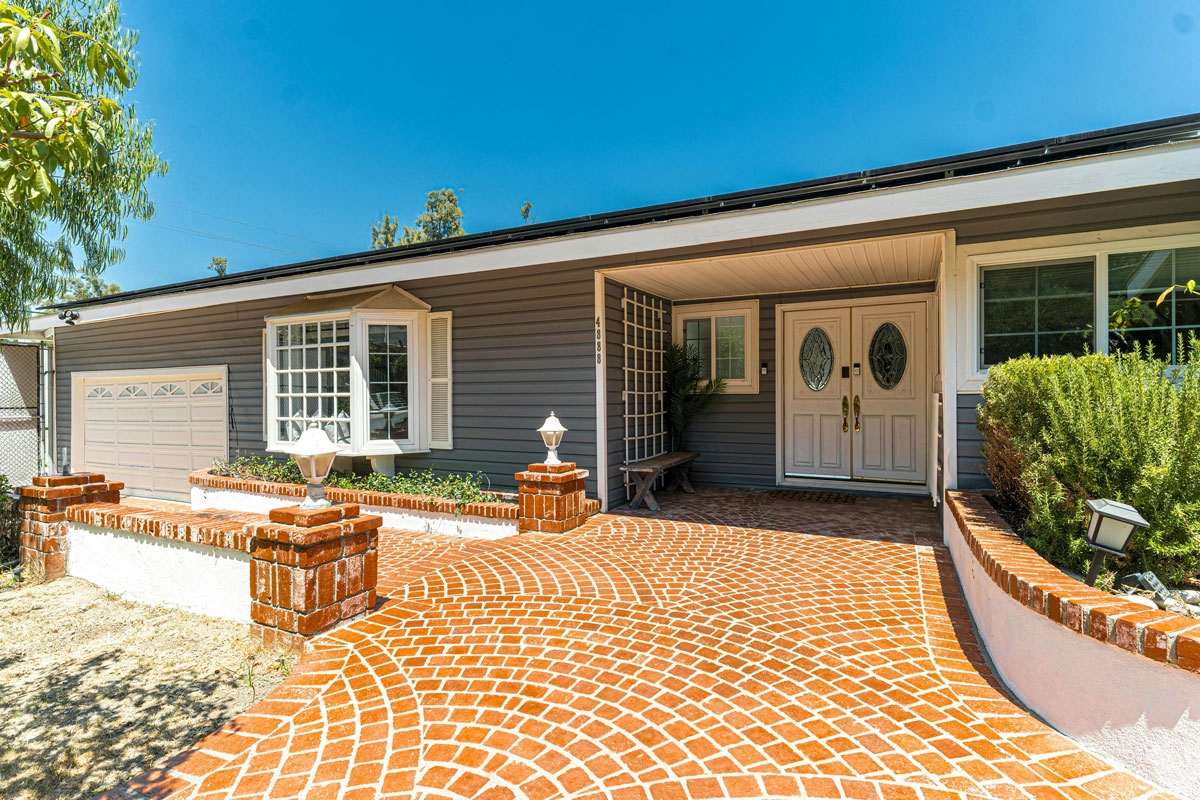
Garage door replacement costs just $4,467 yet recovers $6,655—delivering 149-157.6% ROI, the highest return among all remodeling projects. This exceptional return stems from dramatic curb appeal improvement for minimal investment. Garage doors dominate front façades on most homes, making updates highly visible.
Steel entry door replacement runs $2,323, recouping $2,899 for 124.8% ROI—another outstanding return. Grand entrance fiberglass doors cost $11,566, recovering $8,425 at 72.8%. Manufactured stone veneer adds $10,655, returning $10,039 for 94.2% ROI. These entryway improvements combine for powerful first impression transformation.
Hardscape elements—stone patios, walkways, retaining walls—resist Michigan's freeze-thaw damage better than concrete. Quality materials prevent cracking and settling that quickly date outdoor spaces. Professional installation ensures proper drainage and base preparation protects long-term appearance.
Privacy fencing, mature landscaping, and exterior lighting enhance usability and security. Automatic irrigation systems appeal to buyers wanting maintenance-free lawns. However, highly personalized features—koi ponds, elaborate water features, custom structures—serve individual taste more than broad buyer appeal.
Oversized decks on small lots reduce usable yard space buyers value for children and pets. Multi-level decks costing $40,000+ over-improve modest neighborhoods where comparable homes lack any decks. Scale outdoor investments to lot size and neighborhood expectations for optimal returns.
Maintenance requirements influence buyer perception. Elaborate gardens requiring constant care deter busy professionals. Low-maintenance landscaping with native plants appeals broadly. Simple, attractive outdoor spaces deliver better ROI than complex installations demanding specialized upkeep.
Strategic prioritization maximizes returns within budget constraints. Not every home needs every project. Systematic evaluation reveals which improvements deliver greatest value for your specific property and market timing.
Compare your home objectively to recent sales. Which features do competing properties offer that yours lacks? Updated kitchens, modern bathrooms, finished basements, quality windows, and maintained exteriors represent baseline buyer expectations. Missing any creates value gaps reducing competitiveness.
Conduct honest assessments with real estate professionals familiar with your submarket. Agents see buyer reactions daily and know which features generate showing requests versus reasons for rejection. Their perspective identifies highest-impact improvements for your specific location.
Current trends favor home offices, energy efficiency, and outdoor living spaces. Remote work normalization makes dedicated office space valuable. Rising utility costs amplify energy-efficient upgrade appeal. Understanding current buyer priorities guides project selection toward features commanding premiums today.
However, distinguish trends from fads. Shiplap accent walls and farmhouse sinks enjoyed brief popularity before becoming dated. Classic updates with enduring appeal—neutral colors, quality materials, functional layouts—maintain value across market cycles better than trendy choices.
Schedule exterior projects for spring through fall when weather allows consistent progress. Window and siding installation, deck construction, and landscaping all benefit from dry, moderate temperatures. Winter pauses limit exterior work severely in Michigan.
Interior projects suit winter months when contractors face reduced demand. Kitchen and bathroom remodeling, basement finishing, and interior painting proceed regardless of weather. This seasonal sequencing optimizes contractor availability and often reduces costs during slower winter periods.
Calculate expected returns for each potential project using local cost and recovery data. Compare ROI percentages, but also absolute value additions. A 65% ROI on $20,000 adds $13,000 in value. A 85% ROI on $8,000 adds only $6,800. Sometimes lower-percentage returns on larger projects deliver greater absolute gains.
Explore financing options if cash flow limits multiple projects. HELOCs and home equity loans at 6.49-7.81% interest enable larger improvements generating returns exceeding borrowing costs. Strategic financing accelerates value-building when ROI substantially exceeds interest rates.
Monitor local sales trends quarterly. Softening markets favor high-ROI cosmetic updates over major renovations. Strong seller's markets tolerate larger projects since appreciation offsets lower ROI percentages. Adjust timing and scope based on current conditions.
Economic uncertainty warrants conservative approaches focusing on essential maintenance and high-return improvements. Robust growth periods justify more aggressive investments in amenities and quality upgrades. Flexibility in execution timing optimizes returns across market cycles.
Poor execution destroys even high-ROI project returns. Shoddy workmanship, code violations, and cost overruns transform profitable improvements into value-destroying mistakes. Rigorous planning and contractor vetting protect your investment.
Comprehensive specifications eliminate ambiguity causing budget disputes. Document every material brand, color, size, and quantity. Specify fixture models, tile patterns, and finish details explicitly. Detailed plans reduce "I thought you meant" conversations that generate expensive change orders.
Request itemized estimates breaking down labor and materials separately. This transparency reveals where money goes and enables informed scope adjustments. Compare multiple contractor bids line-by-line to identify true cost differences versus scope gaps.
Verify Michigan contractor licensing through state databases. Licensed contractors carry required insurance protecting you from liability. Check references thoroughly—speak with multiple past clients about quality, timeliness, and communication.
Review portfolios showing similar projects in your style and scope range. Contractors specializing in your project type deliver better results than generalists. Years in business indicates stability and survival through market challenges—important for warranty claims years after completion.
Permitted work ensures code compliance protecting safety and insurability. Unpermitted improvements create disclosure obligations reducing buyer confidence and potentially derailing sales. Future buyers discover unpermitted work during inspections, forcing negotiations or rework at your expense.
Inspections catch deficient work before concealment. Failed inspections frustrate timelines but prevent expensive hidden problems. Code-compliant work protects value long-term through durability and proper functionality meeting building standards.
Strategic remodeling builds equity while improving daily living quality. Michigan's market rewards specific improvements—minor kitchen updates at 86.7% ROI, bathroom remodels at 70.8%, and garage door replacements at 149%. Understanding regional preferences and climate requirements guides decisions toward projects delivering measurable returns rather than serving purely personal preferences that buyers discount.
Contact Alexandria Home Solutions today to discuss which high-ROI projects make sense for your specific property and market position. Our experience with Southeast Michigan homes ensures recommendations based on actual local market performance, not national averages that miss regional nuances. Let's build a strategic improvement plan maximizing both your home's value and your return on every dollar invested.