Key Takeaways:
Fiber cement siding requires systematic maintenance protecting investment and extending service life. Proper care prevents costly repairs, preserves appearance, and maintains warranty coverage. This guide examines cleaning protocols, inspection procedures, repair techniques, and repainting schedules ensuring optimal performance for Michigan homes.
Material composition determines performance. Understanding construction establishes foundation for effective care.
Fiber cement combines cement, sand, and cellulose fibers creating durable composite. Material density 1,200-1,500 kg/m³ provides structural rigidity. Portland cement base with sand aggregate and cellulose reinforcement creates engineered exterior cladding. Composition delivers inherent fire resistance—noncombustible material complies with ASTM E136 standards earning Class A fire rating.
Fiber cement offers exceptional resistance to elements, pests, and fire with a lifespan of up to 50 years. Does not support mold or rot growth. Resists swelling, cracking, warping from weather. Unappealing to woodpeckers and termites. Withstands freeze-thaw cycles better than alternatives. ColorPlus® Technology features factory-applied finish resisting fading, peeling, chipping, and cracking with 15-year warranty.
Regular cleaning prevents dirt, dust, mold accumulation degrading appearance and integrity. Small cracks left unaddressed escalate when exposed to extreme temperatures and moisture. Prevents water penetration causing mold, rot, damage. Improper maintenance voids James Hardie 30-year warranty. For comprehensive guidance on material selection and maintenance, understanding care protocols protects investment. Early detection prevents extensive costly repairs.
Proper cleaning preserves finish. Improper methods cause permanent damage.
The garden hose delivers low-pressure water spray. Soft-bristled brushes—poly, chip, horsehair—provide gentle scrubbing. Microfiber cloths for wiping. For dirt: plain water. For grease: mild dishwashing soap. For mold: vinegar solution (1:3 ratio) or oxygen-based bleach. For stains: exterior degreasing cleaner. ColorPlus® requires only water and a soft brush.
Never use high-pressure washers—forces moisture behind panels voiding warranty. Avoid chlorine bleach, ammonia, strong acids—erode surfaces, strip coatings. No abrasive cleaners, metal brushes, or harsh pads. If pressure washer necessary: 6 feet distance, under 1500 psi, wide fan tips.
Clean once or twice annually—every 6-12 months during spring and fall. High humidity environments: every 6-9 months. Coastal exposure: every 3-6 months due to salt spray. Frequency depends on climate, location, contaminants, exposure. Regular cleaning prevents deterioration and maintains appearance.
Top-to-bottom approach: start at top proceeding downwards preventing streaking. Apply solutions with soft brush, gentle scrubbing. Thorough rinsing with a low-pressure nozzle removing all residue. Clean on cloudy days—sunlight causes premature drying and streaking. Never allow cleaners to dry on siding. When using any cleaner: patch test first prevents discoloration. No dry sweeping; use wet suppression or vacuum.
Regular inspection identifies problems before escalation preventing expensive repairs.
Visual indicators: cracks, chips, loose areas, discoloration. Paint peeling, fading, chalking, cracking. Caulk joints: gaps, cracks, deterioration allowing water seepage. Flashing: improperly installed or missing around windows, doors, vents. Unsupported Z-flashing sagging. Missing ⅛-½ inch gap above flashing. Fasteners: loose, corroded, backed out, or missing. Not flush—overdriving causes cracking. Clearances: less than 6 inches above grade, less than 2 inches from roofing. Landscaping against siding. Sealants: gaps on cut edges allowing water intrusion.
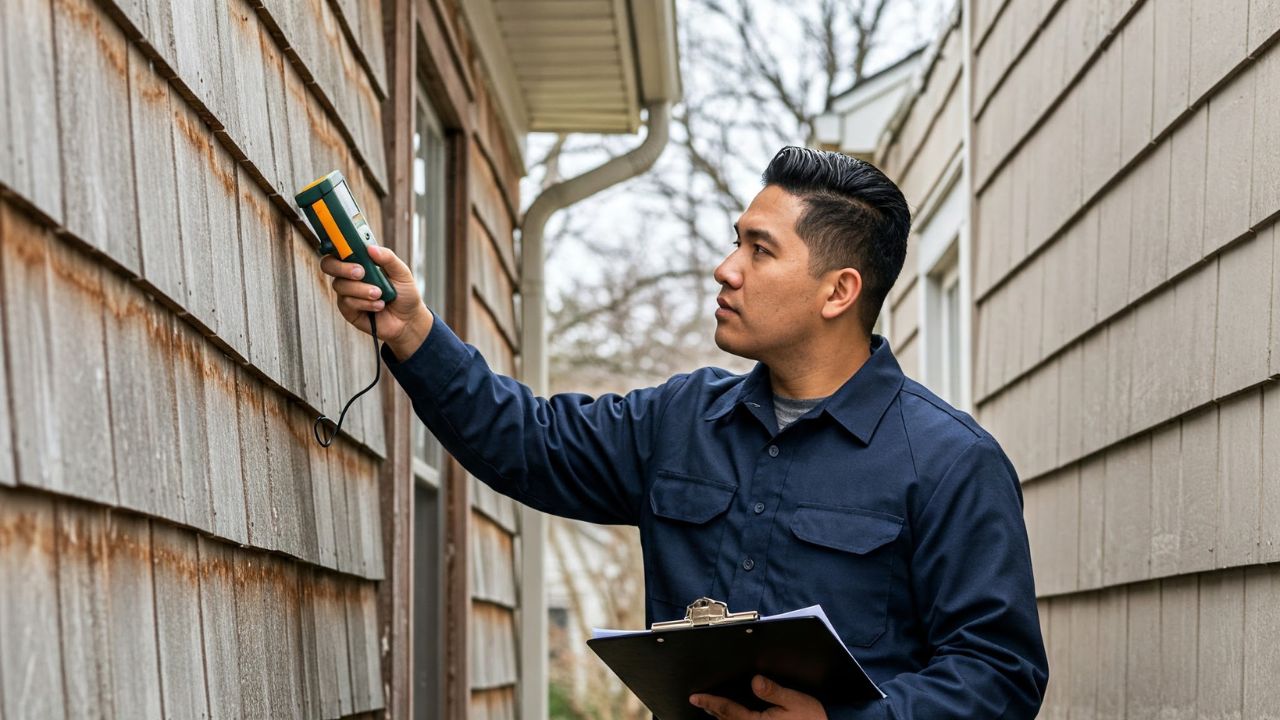
Inspect every spring and fall. Thorough winter prep inspection. Professional inspection every 2-3 years. Caulk joints: annually inspect for gaps. Check where siding meets windows, doors, trim. Flashing: visual inspection around openings. Verify Z-flashing correct installation. Ensure proper overlap and support. Trim: check joint seals, cut edge sealants. Fasteners: check for backing out, proper flush installation, 16-inch spacing. Clearances: verify 6 inches above grade, 2 inches from roofing. Penetrations: inspect blockings, flashing, sealants. Understanding seasonal maintenance schedules develops comprehensive year-round protocols.
Early detection prevents extensive damage. Small problems escalate with temperature extremes and moisture. Compromised caulk causes wood rot, framing damage, sheathing compromise. Missing flashing leads to substrate damage, rot, mold, structural issues. Regular inspection identifies problems before escalation. Professional inspection helps address issues preventing expensive remediation.
Prevention costs less than repair. Strategic measures protect investment.
Install and maintain gutters directing water away. Clean regularly preventing blockages. Re-apply caulking when worn around penetrations, flashings, connections. Use permanently flexible sealants: ASTM C920 Grade NS Class 25 or higher, ASTM C834 compliant. Caulk at non-self-flashing penetrations. Never caulk between siding and horizontal flashing or J-channels. Seal all cut edges and penetrations—prevents water wicking causing damage. Water-resistive barrier mandatory with proper flashing. Grade slopes away 6 inches minimum clearance. Landscaping not against siding. Maintain 6 inches above grade, 2 inches from roofing.
The drainage plane catches water directed downward. Capillary control prevents water absorption. Cladding ventilation recommended: 3/4-1 inch clear space accelerates drying. Vents at top, bottom, horizontal interruptions. Vapor control layer behind cladding. Supporting blockings prevents sagging. All penetrations require blocking, flashing, sealant.
No deicing salt contact—damages finish. Use sand or gravel. Clear snow from base. Proper caulking prevents moisture entry during freeze-thaw. Keep gutters clean preventing ice dams. Trim vegetation: shrubs, bushes, trees away from siding. Prevents damage, moisture buildup. Adjust sprinklers to avoid oversaturation. Coastal: stainless steel fasteners required. Galvanized for standard. Clean coastally every 3-6 months. ColorPlus® 15-year warranty provides protection. For professional siding services ensuring weather protection, certified contractors maximize performance.
Fiber cement is unappealing to woodpeckers and termites. Resists moisture damage eliminating pest attraction. No mold or rot growth. Noncombustible ASTM E136 compliant. Trim vegetation maintaining clearances. Material composition (cement, sand, cellulose) inherently pest-resistant unlike wood. Proper maintenance eliminates moisture problems preventing pest-attracting conditions.
Repair techniques depend on product type and damage extent.
ColorPlus®: Use official Touch-Up Kits matching factory finish resisting aging, chalking. The kit contains paint, nail concealer, edge sealer. Use sparingly—only areas smaller than dime. Larger damage requires section replacement. No color-matched caulk or patching compounds on ColorPlus®. Never use third-party paints—compromise warranty. Third-party doesn't match accurately, ages rapidly, and may not cure properly. Warranty excludes third-party coating coverage.
Field-painted: Fill small cracks with exterior patching compound. Cementitious compound for chips, dents, cracks. Significant damage requires panel replacement. Repair immediately prevents water and pest intrusion.
Store flat, dry, covered. Installing wet clothes causes shrinkage. Carry on edge. Outdoor cutting: circular saw with HardieBlade® and vacuum system. Shears for under 7/16 inch. Indoor: shears or score-and-snap only. No power saws. Wet suppression for dust. Seal all cut edges with compatible sealants. Water-resistive barrier mandatory. Corrosion-resistant fasteners—galvanized or stainless. Drive flush avoiding overdriving. Space 16 inches on-center into framing. Blind nailing is preferred. Pneumatic recommended.
ColorPlus® Touch-Up Kits. Exterior patching compound. Cementitious compound. Compatible sealants, primer-based paints. Flexible paintable caulk. Elastomeric sealant ASTM C920 NS Class 25+. Latex sealant ASTM C834. Corrosion-resistant fasteners. Coastal: stainless required. Circular saw with HardieBlade®. Vacuum system. Shears. Score-and-snap tools. Pneumatic equipment. Water-resistive barrier materials.
Paint selection affects longevity. ColorPlus® and field-painted require different approaches.
Field-painted: every 7-15 years depending on climate, paint quality, exposure. ColorPlus®: 15-year warranty, first repaint 15-20 years versus field 8-12 years. Over 50 years: ColorPlus® 2-3 cycles versus field 4-5 cycles. ColorPlus® saves thousands by eliminating frequent repainting. Factors: climate, paint quality, UV exposure, moisture, temperature extremes. High humidity: 10% faster acceleration. Regular inspection determines the schedule. Repainting ColorPlus® voids warranty.
Premium 100% acrylic latex highly recommended. Flexible allowing expansion/contraction preventing cracking. Excellent mildew, water, UV resistance. Sherwin-Williams Duration®: high film build, one coat over primer, resists peeling/blistering. SuperPaint: budget-friendly. Latitude: weather-adaptable. Emerald: superior durability. Loxon Masonry Primer enhances mildew resistance. Benjamin Moore: Regal Select, Aura®, Ultra Spec®. PPG Timeless. Behr Premium Plus Ultra® (mildew-resistant). Never use stains, oil-based, alkyd paints. No third-party on ColorPlus®. Apply two coats. Back-roll after spraying for better adhesion.
Inspect for damage—repair before painting. Remove all dirt, grime, mildew, debris. Low-pressure spray, garden hose, mild detergent with soft brush. No high-pressure washing or sandblasting. Repainting: minimum 2100 psi cleaning removing dirt, grease, loose coatings. Dry completely 24-48 hours. Scrape loose paint. Sand glossy surfaces dull. Re-caulk gaps around windows, doors, trim—flexible paintable caulk. Prime bare spots, peeling areas, color changes—high-quality acrylic primer. Paint optimal conditions: no rain, under 85% humidity, 50-90°F range unless paint formulated otherwise. For comprehensive siding solutions, proper preparation ensures optimal results.
Maintenance investments prevent expensive repairs.
ColorPlus® 15-year warranty significantly reduces repainting costs saving thousands. Over 50 years: 2-3 cycles versus field 4-5 cycles. Minimal routine costs: 6-12 month cleaning with hose and brush. Caulking inspection every 2-3 years. Regular maintenance prevents escalating repair costs. 50-year lifespan reduces replacement frequency. Less waste from dimensional stability. ColorPlus® reduces VOC release, overspray, and disposal frequency.
Up to 50-year lifespan with proper maintenance. A 30-year warranty demonstrates confidence. Regular cleaning prevents degradation. Proper caulking prevents moisture entry. Early repair prevents extensive damage. Resists mold, rot, swelling, cracking, warping. Dimensional stability maintains envelope integrity. Well-maintained signals quality construction. Following guidelines preserves warranty adding value. Documentation proves proper care.
Small problems escalate with temperature extremes and moisture. Compromised caulk causes rot, framing damage, sheathing compromise. Missing flashing leads to substrate damage, mold, structural issues. Unsealed edges allow water wicking causing internal damage. Improper maintenance voids warranty affecting resale value. High-pressure washing, harsh chemicals void warranty. Poor preparation causes paint failure. Clogged gutters cause ice dams. Inadequate clearances trap moisture. Higher repair costs, decreased home value, frequent repainting, structural repairs, lost warranty coverage.
Regular Cleaning: Clean every 6-12 months using a garden hose with low-pressure spray and soft brush removing contaminants. Never high-pressure washers over 1500 psi, chlorine bleach, ammonia, acids, or abrasive cleaners voiding warranty.
Systematic Inspection: Inspect spring and fall checking caulk joints, flashing, clearances (6 inches grade, 2 inches roofing), fasteners, cut edge seals. Professional inspection every 2-3 years.
Moisture Management: Maintain clean gutters directing water away. Re-apply flexible caulking (ASTM C920 NS Class 25+) when worn. Ensure water-resistive barriers are properly installed. Trim vegetation away. Adjust sprinklers to avoid oversaturation.
Proper Repair: Use ColorPlus® Touch-Up Kits for areas under dime size. Replace damaged sections for larger damage. Seal all cut edges immediately. Never third-party paints on ColorPlus® compromising warranty.
Strategic Repainting: Field-painted every 7-15 years using premium 100% acrylic latex. ColorPlus® eliminates repainting 15 years with warranty. Prepare thoroughly: clean, dry 24-48 hours, scrape, caulk, prime bare spots. Paint optimal conditions.
50-year lifespan with maintenance reduces replacement costs. ColorPlus® saves thousands by eliminating frequent repainting—2-3 cycles versus field 4-5 over 50 years. Minimal routine costs: cleaning, caulking inspection. Prevents escalating repair costs. Preserves professional appearance creating a powerful impression. Well-maintained signal quality increases buyer confidence. 30-year transferable warranty adds resale value.
Prevents moisture penetration causing mold, rot, damage. Maintains envelope integrity. Class A fire rating provides superior safety. Resists mold, rot, pests. Withstands freeze-thaw cycles. Following guidelines preserves warranty. Improper maintenance voids coverage increasing expenses. Reduces environmental impact—fewer paint cycles, less VOC release, no toxic treatments. Regular spring/fall inspections identify problems before escalation. Professional inspection provides comprehensive assessment. Extends service life providing reliable protection. Investment in resilience and safety through fire resistance. Contact Alexandria Home Solutions for professional fiber cement maintenance ensuring optimal performance and maximum lifespan.